For decades, satellites have worked like cameras in the sky.
They captured images, collected signals, measured weather, and observed Earth. But there was one limitation: almost everything they collected had to be transmitted back to Earth before it could be processed.
That created a bottleneck.
Bandwidth is limited. Ground stations aren’t always available. And the more advanced satellites become, the more data they generate.
China may have just taken a step toward changing that.
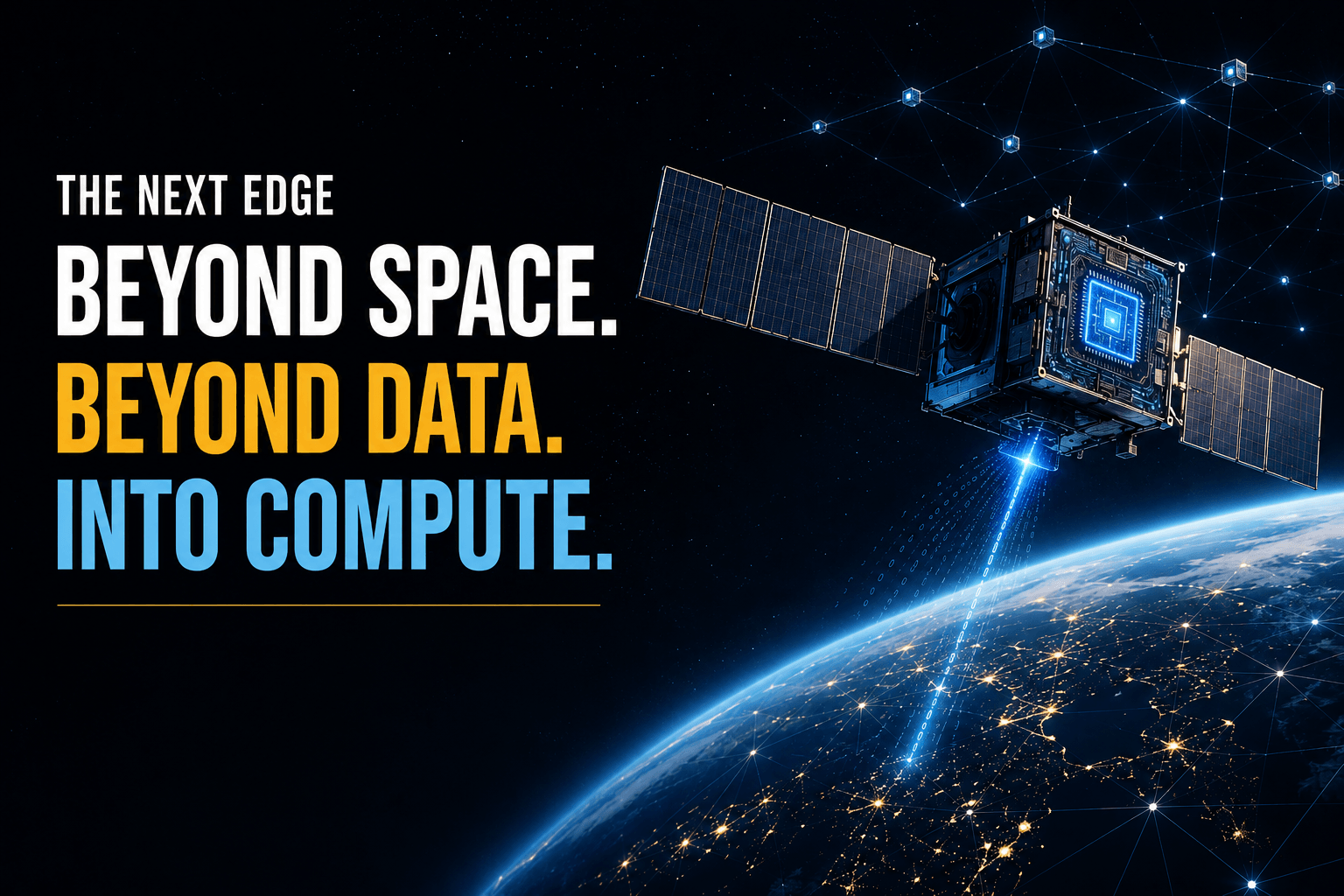
Shanghai Xingshu Tiansuan Space Technology has launched the first satellites in a planned constellation designed not just to observe from space, but to compute in space. The company ultimately aims to deploy around 1,000 satellites as part of this network.
At first glance, this might sound like another satellite launch.
It isn’t.
The real innovation is where the computing happens.
Instead of sending enormous amounts of raw data back to Earth for analysis, these satellites are designed to process information while still in orbit. That means only the useful results—or much smaller datasets—need to be transmitted to the ground. This could reduce communication bottlenecks, speed up decision-making, and make satellite constellations far more efficient.
Imagine thousands of Earth-observation satellites watching forests, oceans, shipping routes, weather systems, or disaster zones.
Today, many of them function like remote sensors.
Tomorrow, they could function like a distributed cloud-computing network orbiting the planet.
That changes the role of satellites from passive collectors of information into active processors of information.
If this approach proves commercially viable, it could influence everything from climate monitoring and disaster response to logistics, communications, scientific research, and national security.
This also reflects a broader trend in technology.
For years, computing moved from personal computers to centralized data centers. Then it expanded toward the edge, where phones, vehicles, factories, and sensors began processing information closer to where it was created.
Space could become the next edge.
The launch does not mean that orbit will replace terrestrial data centers. Power, maintenance, cost, and hardware upgrades remain major challenges. But it does signal that countries and companies are beginning to think differently about where computing can happen.
The next competition in space may not be over who launches the most satellites.
It may be over who builds the most capable computing infrastructure above the Earth.
That would mark a new chapter in the commercialization of space—one where orbit is no longer just a place to collect data, but a place to compute it.