Introduction
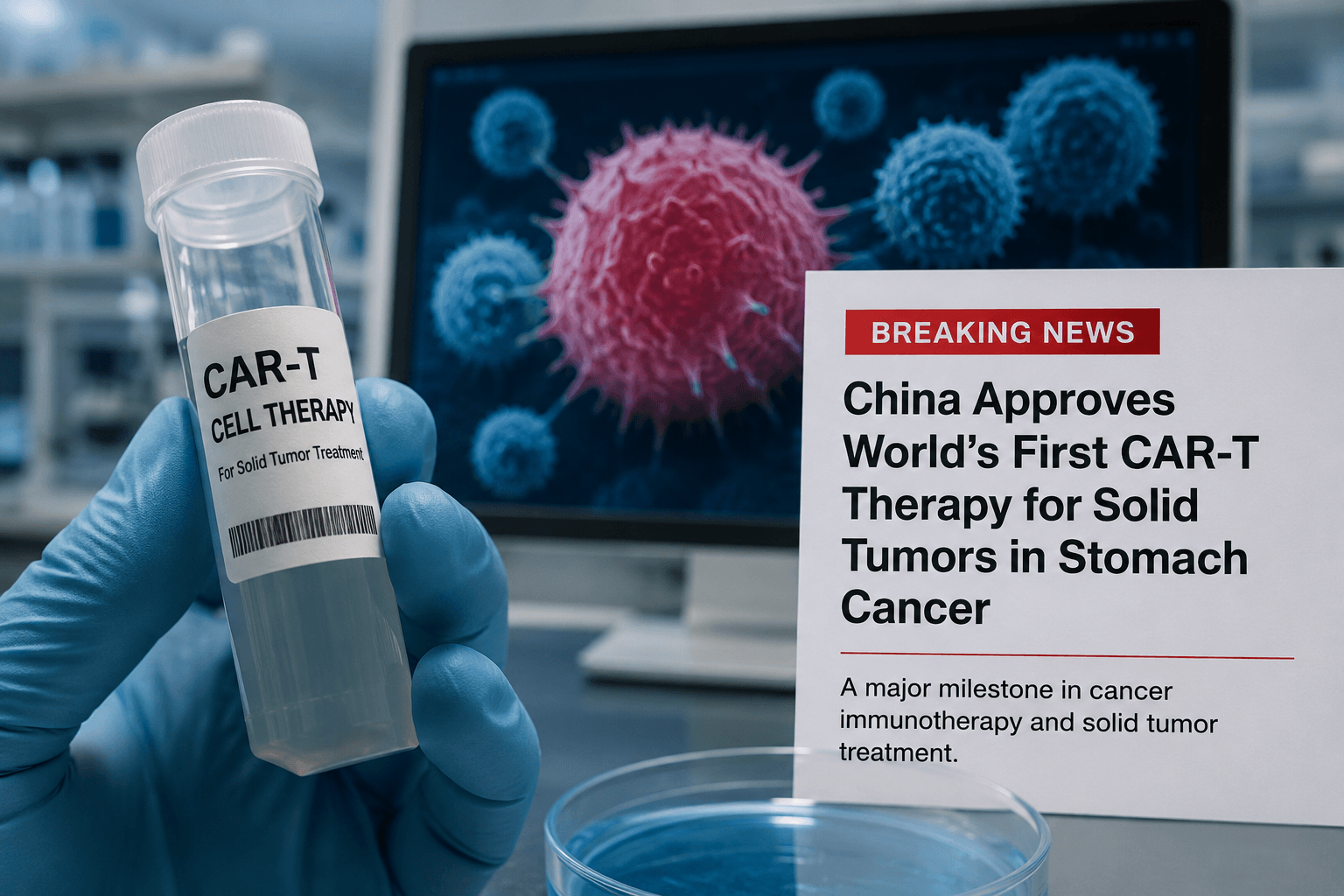
China has approved satricabtagene autoleucel (satri-cel, CT041), a CAR-T cell therapy developed by CARsgen Therapeutics, for the treatment of certain patients with advanced stomach cancer. The decision marks the world’s first regulatory approval of a CAR-T therapy for a solid tumor.
Announced on June 22, 2026, the approval covers patients with Claudin 18.2 (CLDN18.2)-positive, HER2-negative advanced gastric or gastroesophageal junction adenocarcinoma (G/GEJA) who have previously received at least two lines of treatment. The milestone expands CAR-T technology beyond blood cancers and into the treatment of solid tumors.
Approval Details and Clinical Evidence
Satri-cel is an autologous CAR-T cell therapy manufactured individually for each patient. The process involves collecting a patient’s T cells, genetically engineering them to recognize CLDN18.2-positive cancer cells, expanding the modified cells, and reinfusing them into the patient.
CLDN18.2 has emerged as an important target in gastric cancer and other gastrointestinal malignancies because of its high expression in tumor cells and limited presence in healthy tissues.
The approval was supported by results from the CT041-ST-01 Phase II trial, described as the first randomized controlled study of a CAR-T therapy in a solid tumor setting. According to reported findings, satri-cel significantly improved progression-free survival compared with physician’s-choice treatments in heavily pretreated patients.
Researchers also reported a manageable safety profile despite known CAR-T risks such as cytokine release syndrome (CRS), neurotoxicity, and other immune-related adverse events.
Why This Approval Is Significant
First CAR-T Approval for a Solid Tumor
CAR-T therapies have already transformed treatment for blood cancers, including leukemia, lymphoma, and multiple myeloma. However, success in solid tumors has remained elusive due to several challenges:
- Difficulty penetrating dense tumor masses.
- Immunosuppressive tumor microenvironments.
- Risk of damaging healthy tissues.
- Limited persistence of engineered T cells within tumors.
The approval of satri-cel is the first regulatory validation that CAR-T therapy can successfully be developed for a solid tumor indication.
Eligible Patients
The approval applies to patients with:
- CLDN18.2-positive tumors.
- HER2-negative advanced gastric or gastroesophageal junction adenocarcinoma.
- Disease that has progressed after at least two prior lines of systemic therapy.
The treatment is therefore aimed at patients with limited remaining treatment options.
Commercial Rollout
CARsgen Therapeutics said commercial deployment of satri-cel is expected to begin within weeks of approval.
The company anticipates approximately 200 treatment orders during the second half of 2026 and indicated that some patients were already waiting for treatment at the time of the announcement. Pricing details have not yet been disclosed.
Implications for CLDN18.2-Targeted Therapies
The approval also strengthens the clinical validation of CLDN18.2 as a therapeutic target. Multiple research programs are evaluating CLDN18.2-targeted therapies in gastric cancer, pancreatic cancer, and other gastrointestinal malignancies.
The milestone may also support broader development efforts involving solid-tumor CAR-T therapies targeting mesothelin, glypican-3 (GPC3), and EGFR-related antigens.
Key Facts at a Glance
- Satri-cel (CT041) is the world’s first approved CAR-T therapy for a solid tumor.
- Developed by CARsgen Therapeutics.
- Approved in China on June 22, 2026.
- Targets CLDN18.2-positive, HER2-negative advanced gastric and gastroesophageal junction cancers.
- Intended for patients who have received at least two prior treatment lines.
- Approval was supported by Phase II CT041-ST-01 trial data showing improved progression-free survival.
- Commercial rollout is expected to begin within weeks, with around 200 treatment orders projected in the second half of 2026.
Why It Matters
The approval provides a new treatment option for patients with advanced CLDN18.2-positive gastric cancer who have exhausted standard therapies. It also establishes the first regulatory precedent for CAR-T therapy in solid tumors, an area that has historically presented major scientific and clinical challenges.
Conclusion
China’s approval of satri-cel (CT041) marks a significant milestone in cancer treatment as the first CAR-T therapy authorized for a solid tumor. Supported by Phase II clinical data and targeting patients with advanced CLDN18.2-positive gastric and gastroesophageal junction cancers, the therapy represents both a new treatment option for eligible patients and an important advancement in the development of cell-based immunotherapies for solid tumors.