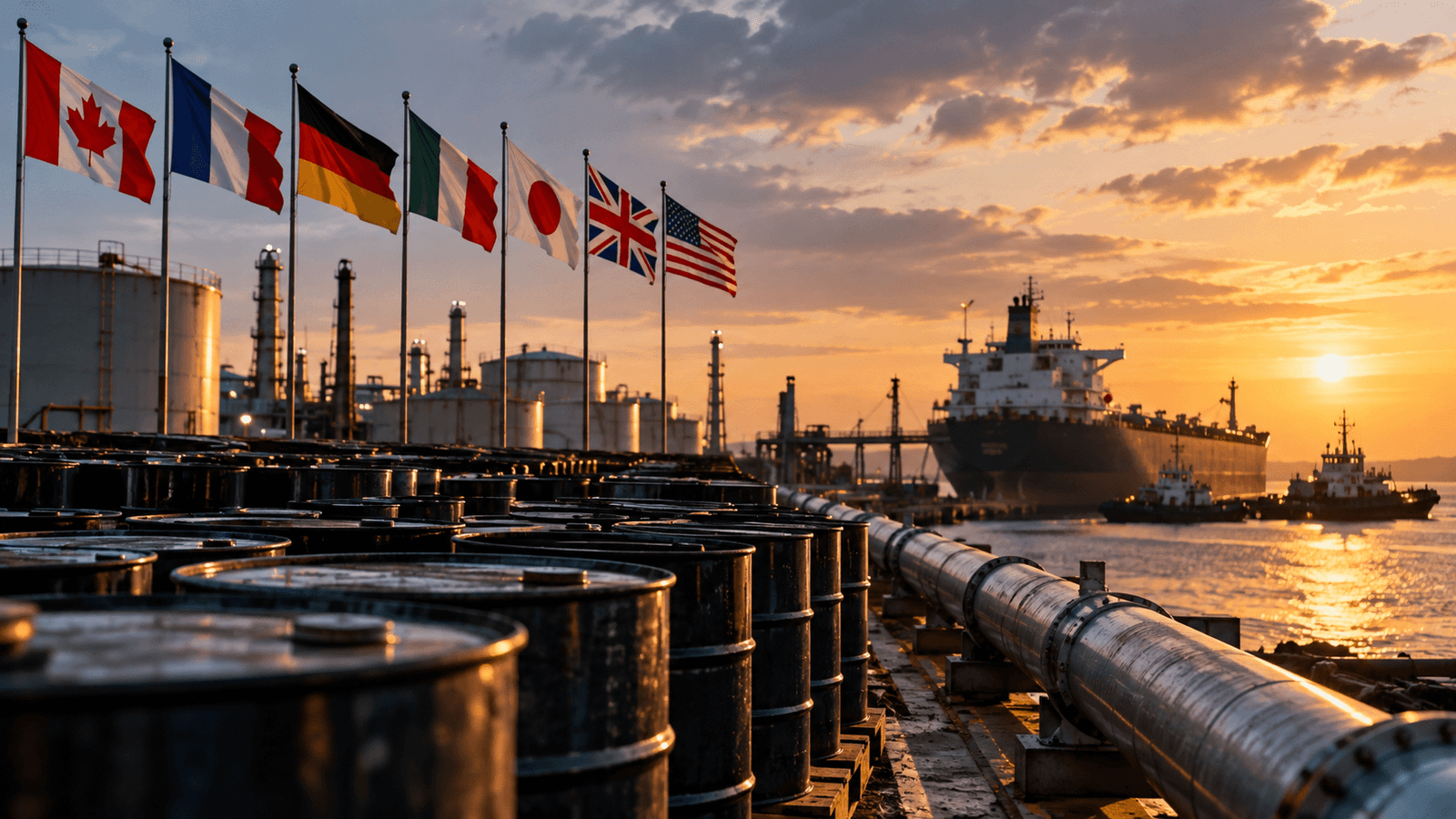
The Group of Seven (G7) has agreed to coordinate the release of up to 100 million barrels of oil and fuel reserves in an effort to ease pressure on global energy markets and strengthen fuel supplies.
The agreement comes as concerns over oil and refined fuel availability have pushed energy prices higher and increased pressure on consumers and businesses.
Under the plan, G7 countries and participating partners will work through the International Energy Agency (IEA) to release crude oil and petroleum products from emergency reserves. The measures are expected to provide additional supply to the market over the coming months, with a significant portion of diesel supplies being released early in the programme.
Why is the G7 releasing oil reserves?
The coordinated release is intended to address short-term supply pressures in global energy markets. Governments maintain strategic petroleum reserves as a safeguard against major disruptions to oil supplies, and those reserves can be released during periods of exceptional market stress.
The latest G7 decision is particularly focused on ensuring adequate supplies of diesel and other refined petroleum products, which are essential for transportation, agriculture, manufacturing and other parts of the global economy.
The G7 has also committed to maintaining the flow of energy products between member countries and avoiding additional export restrictions that could further tighten supplies.
What does the 100 million barrel release mean?
The proposed release of up to 100 million barrels represents a substantial amount of additional oil and fuel entering global markets. However, the headline figure should not be interpreted as 100 million barrels of entirely new production.
The release will draw on existing emergency reserves, and the precise amount and timing of supplies will depend on individual countries’ commitments and market conditions.
The IEA will coordinate the wider effort and assess whether additional action is required as the situation develops.
Impact on oil and fuel prices
Increasing the availability of crude oil and refined products can reduce supply pressures and potentially limit price increases. Markets responded to news of the planned releases with declines in some oil and fuel contracts.
The effect on prices, however, will depend on how quickly the reserves are released, the scale of the underlying supply disruption and global demand.
A strategic reserve release can provide temporary relief, but it does not permanently increase global oil production. If supply disruptions continue after the reserves are exhausted, energy markets could come under renewed pressure.
What does it mean for consumers?
The G7 reserve release could help ease pressure on fuel markets if the additional supplies are sufficient to narrow the gap between demand and available supply.
Consumers may benefit indirectly through lower wholesale prices, although changes in retail petrol and diesel prices will vary between countries. Taxes, local pricing policies, currency movements and refining costs also influence what consumers ultimately pay at the pump.
What happens next?
The IEA will coordinate the participating countries’ reserve releases and monitor developments in global energy markets.
The G7 has indicated that further measures could be considered if market conditions remain under severe pressure. The immediate focus will be on getting additional crude and refined fuel supplies into the market while maintaining energy security among participating countries.
The coordinated release highlights the role of strategic petroleum reserves as a tool for governments to respond to major disruptions in global energy markets. Its longer-term impact will depend on whether broader supply problems ease in the coming months.