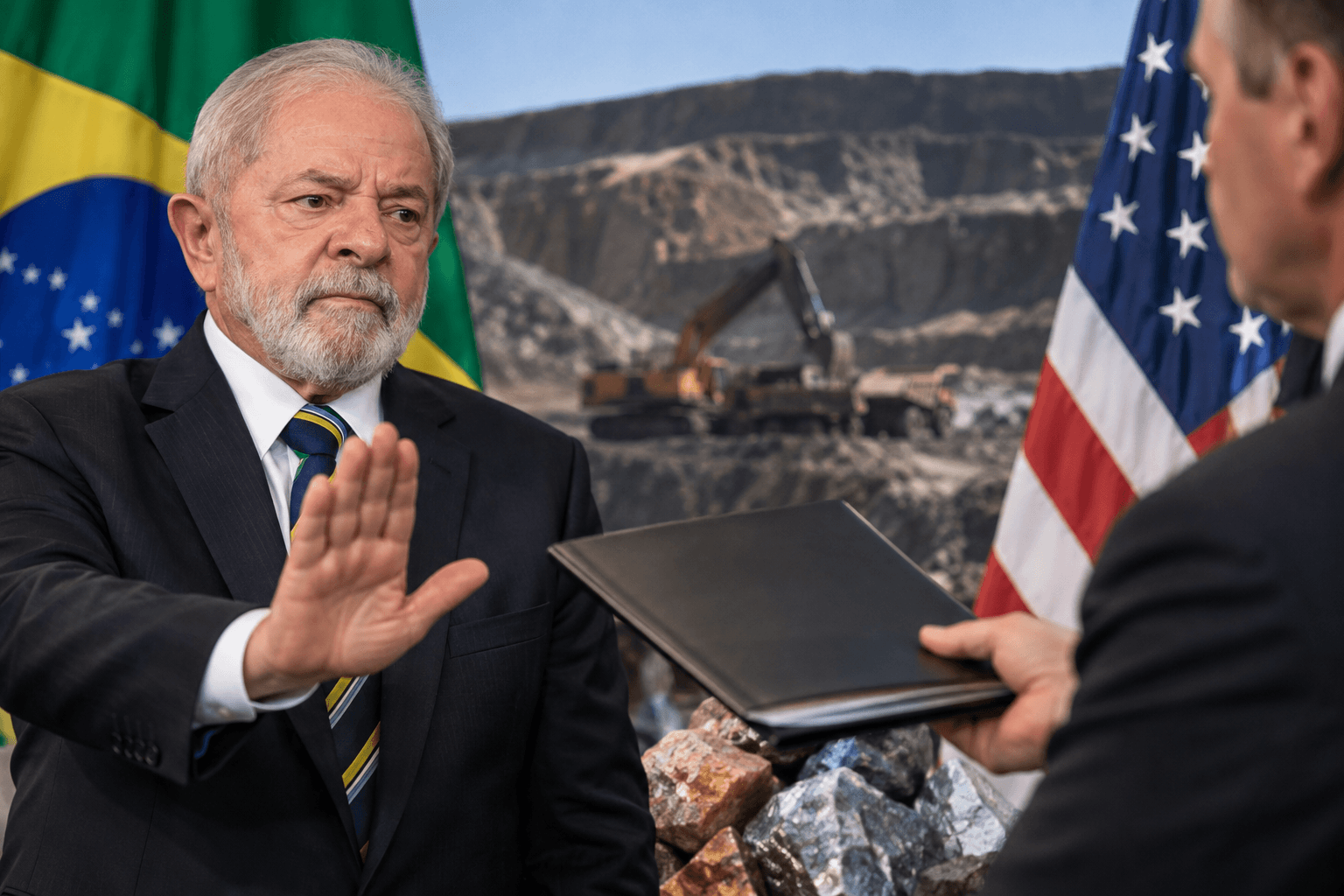
Brazilian President Luiz Inácio Lula da Silva has rejected a U.S. proposal that sought greater access to information and potential advantages for American interests in Brazil’s critical-minerals sector.
Speaking on September 17, Lula said the proposal was an old document that had already been rejected by his government and was never formally negotiated. He said Brazil would not accept provisions that could give the United States priority over the country’s mineral resources.
The proposal, reportedly presented by the United States in October 2025 during discussions over trade and tariffs, included a request for prior knowledge about the sale of Brazilian mining assets, including assets involving critical minerals.
Lula said the document was considered unacceptable and that it was not part of the current negotiations between Brazil and the United States.
Brazil Pushes for Domestic Mineral Processing
The dispute comes as Brazil is strengthening its policy for critical and strategic minerals. On September 16, Lula sanctioned legislation creating the National Policy for Critical and Strategic Minerals and the National Council for the Industrialization of Critical and Strategic Minerals.
The policy aims to encourage greater processing and transformation of minerals inside Brazil instead of relying primarily on exports of raw materials. It also establishes mechanisms for financing, investment incentives and support for research, development and innovation.
According to Brazil’s government, the policy is designed to increase the value generated domestically from critical minerals while supporting technological development, energy security and industrial growth.
Lula has emphasized that foreign companies can continue to invest in Brazil, but has argued that projects involving strategic minerals should contribute to domestic processing and the production of higher-value goods.
Why Critical Minerals Matter
Critical minerals have become increasingly important because they are used in sectors including renewable energy, electric vehicles, electronics, advanced manufacturing and other strategic technologies.
Brazil possesses significant mineral resources and has attracted growing international interest in developing its reserves. At the same time, governments around the world are seeking to secure alternative sources and reduce vulnerabilities in critical-mineral supply chains.
The disagreement over the U.S. proposal therefore comes against a broader backdrop of competition over access to strategic resources and the development of domestic mineral-processing industries.
For Brazil, the latest policy signals a focus on retaining more value from its mineral resources within the country. For the United States, securing reliable supplies of critical minerals has become an increasingly important economic and strategic priority.
Lula’s rejection of the proposal underscores the sensitivity surrounding foreign involvement in Brazil’s strategic mineral sector as the country seeks to expand its role in the global critical-minerals supply chain.