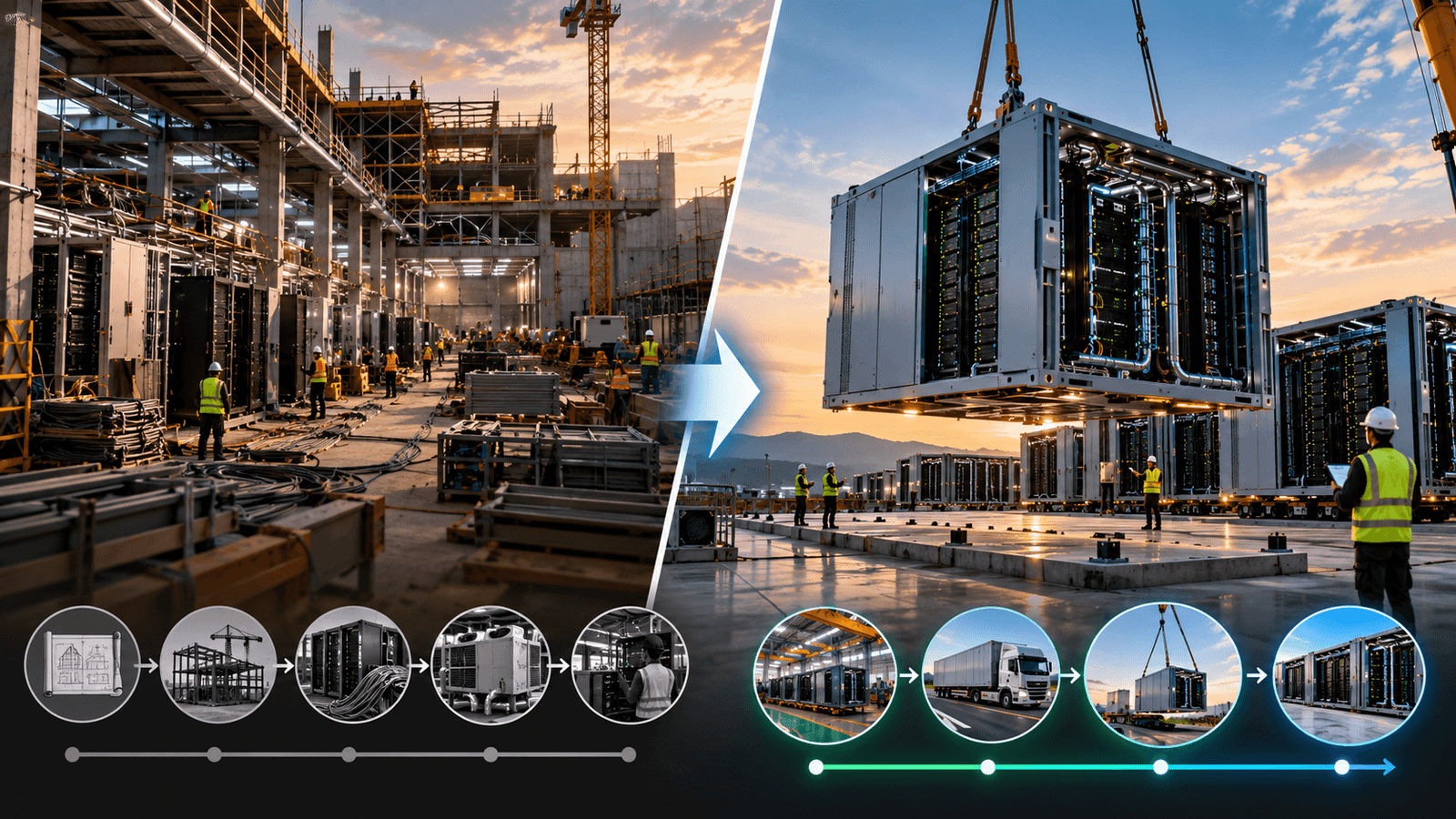
NVIDIA has introduced a modular AI infrastructure design aimed at helping companies deploy computing capacity faster as demand for artificial intelligence continues to grow. The approach focuses on building and testing integrated computing systems in factories before transporting them to data centre sites for installation.
The initiative, known as NVIDIA DSX POD, is designed to simplify the deployment of large-scale AI infrastructure and reduce the time required to bring new computing resources online.
How NVIDIA’s Modular AI Factories Work
Traditional AI data centres require extensive on-site installation and integration of computing hardware, networking equipment, power systems and cooling infrastructure. Coordinating these components can make deployment a lengthy and complex process.
NVIDIA’s modular approach moves much of this work into a factory environment. Computing systems and supporting infrastructure can be assembled, integrated and tested before being delivered to their intended locations.
Once on-site, the preconfigured units can be connected to the facility’s existing or prepared power, cooling and networking systems. This approach is intended to reduce installation complexity and help operators bring AI workloads into production sooner.
NVIDIA has outlined a deployment target of as little as 14 days, compared with around six months for more conventional deployment processes. Actual timelines will depend on site readiness, infrastructure requirements and the scope of each installation.
Why Faster AI Infrastructure Deployment Matters
The growth of generative AI, large language models and other compute-intensive applications has increased demand for specialised computing infrastructure. Cloud providers, AI developers and enterprises need additional capacity to train models and run inference workloads at scale.
However, deploying new computing capacity involves more than installing servers. Power availability, liquid cooling, networking and facility preparation can all affect how quickly a data centre becomes operational.
By standardising and pretesting infrastructure before delivery, NVIDIA aims to address some of the delays associated with integrating complex systems on-site.
Faster deployment could also help operators put expensive computing hardware to work earlier, potentially improving infrastructure utilisation and reducing delays in expanding AI services.
Infrastructure Partners and Industry Adoption
Building modular AI factories requires coordination across several parts of the data centre supply chain, including computing hardware, networking, power management and cooling.
NVIDIA is working with infrastructure partners, including Dell Technologies, Hewlett Packard Enterprise, Lenovo, Schneider Electric and Vertiv, as part of the broader ecosystem supporting its AI infrastructure strategy.
The participation of companies across these categories reflects the complexity of modern AI facilities, where computing performance depends on the integration of multiple systems rather than processors alone.
Deployment Challenges Remain
Although modular infrastructure could shorten installation timelines, it does not eliminate the challenges involved in building and operating large AI facilities.
Sites still need sufficient electricity, suitable cooling systems, network connectivity and the necessary permits and physical infrastructure. In regions where grid connections or power capacity are limited, these requirements may remain major obstacles.
The proposed 14-day deployment timeline should therefore be understood as a target under suitable conditions, rather than a guarantee that a complete AI data centre can be constructed and made operational within two weeks.
NVIDIA has indicated that global delivery of DSX POD AI factories is expected to begin in early 2027.
What It Means for the AI Infrastructure Market
NVIDIA’s modular AI factory approach reflects a broader shift towards treating AI infrastructure as an integrated, repeatable system instead of a collection of components assembled separately at each site.
If the model proves effective at scale, it could help cloud providers and enterprises expand computing capacity more consistently and reduce some of the delays associated with deploying new AI systems.
The extent of its impact will depend on real-world deployment results, infrastructure costs and the availability of power and suitable facilities.
For now, the initiative highlights an important development in the AI industry: as demand for computing power increases, the speed and efficiency of deploying infrastructure are becoming just as important as the performance of the hardware itself.