Introduction
Trade tensions between China and the European Union are increasing as Brussels considers stronger measures to protect European industries from what it views as unfair competition from Chinese imports.
The dispute centers on concerns that Chinese industrial subsidies have created excess manufacturing capacity, allowing Chinese companies to export goods at prices many European competitors struggle to match.
In response to discussions about new trade restrictions, China has warned that it will take retaliatory measures if additional barriers are imposed on Chinese products entering the EU market.
Why the EU Is Considering New Restrictions
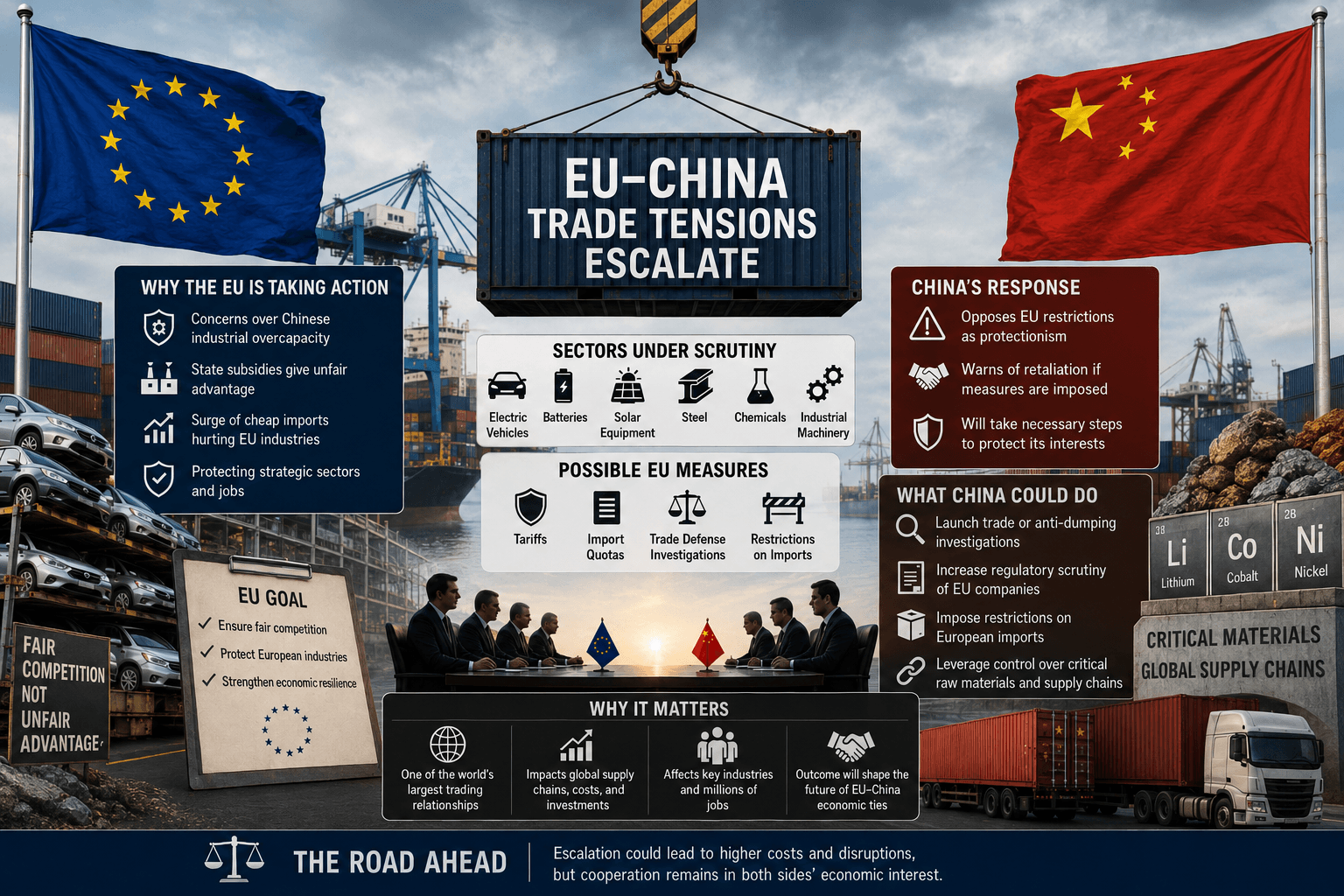
European policymakers are debating a broader set of trade-defense measures aimed at limiting the impact of heavily subsidized Chinese imports.
The discussion extends beyond electric vehicles and includes batteries, solar equipment, steel, chemicals, industrial machinery, and other clean-energy technologies.
EU officials argue that China’s manufacturing capacity has expanded beyond domestic demand, leading to a surge of exports into global markets. According to Brussels, this creates an uneven competitive environment for European manufacturers and could weaken key industries over time.
The proposed measures are intended to protect strategic sectors and strengthen Europe’s industrial competitiveness.
Why China Is Pushing Back
China rejects claims that its exports represent unfair competition.
Chinese officials have accused the EU of moving toward protectionism and using trade restrictions to shield domestic industries from international competition.
Beijing argues that restricting Chinese goods would undermine free trade principles and damage economic cooperation between two of the world’s largest trading partners.
Recent statements from Chinese officials indicate that any new EU restrictions would likely be met with countermeasures.
What China Could Do in Response
China has several tools available if trade tensions continue to escalate.
Possible responses include launching trade investigations involving European companies, increasing regulatory scrutiny of businesses operating in China, or imposing restrictions on selected European imports.
China could also use its influence within critical supply chains. The country remains a major supplier of key raw materials, battery components, and manufacturing inputs used by industries across Europe.
While no specific measures have been announced, Beijing has made clear that it is prepared to respond if new restrictions are introduced.
Why It Matters
The European Union and China maintain one of the world’s largest trading relationships, with deeply interconnected supply chains and investment links.
A prolonged trade dispute could increase costs for businesses, disrupt supply chains, and create additional uncertainty for industries that rely on cross-border trade.
At the same time, Europe and China remain economically dependent on each other in many sectors, making a complete breakdown in relations unlikely.
The dispute reflects a broader shift in global trade policy, as governments place greater emphasis on economic security, industrial resilience, and strategic industries.
Conclusion
The latest exchange highlights growing China-EU trade tensions at a time when governments are increasingly reassessing economic dependencies and industrial policy.
The European Union argues that stronger trade defenses are needed to protect domestic industries, while China views those efforts as protectionist.
How both sides manage this dispute could have significant implications for global trade, manufacturing supply chains, and one of the world’s most important economic relationships.