Introduction
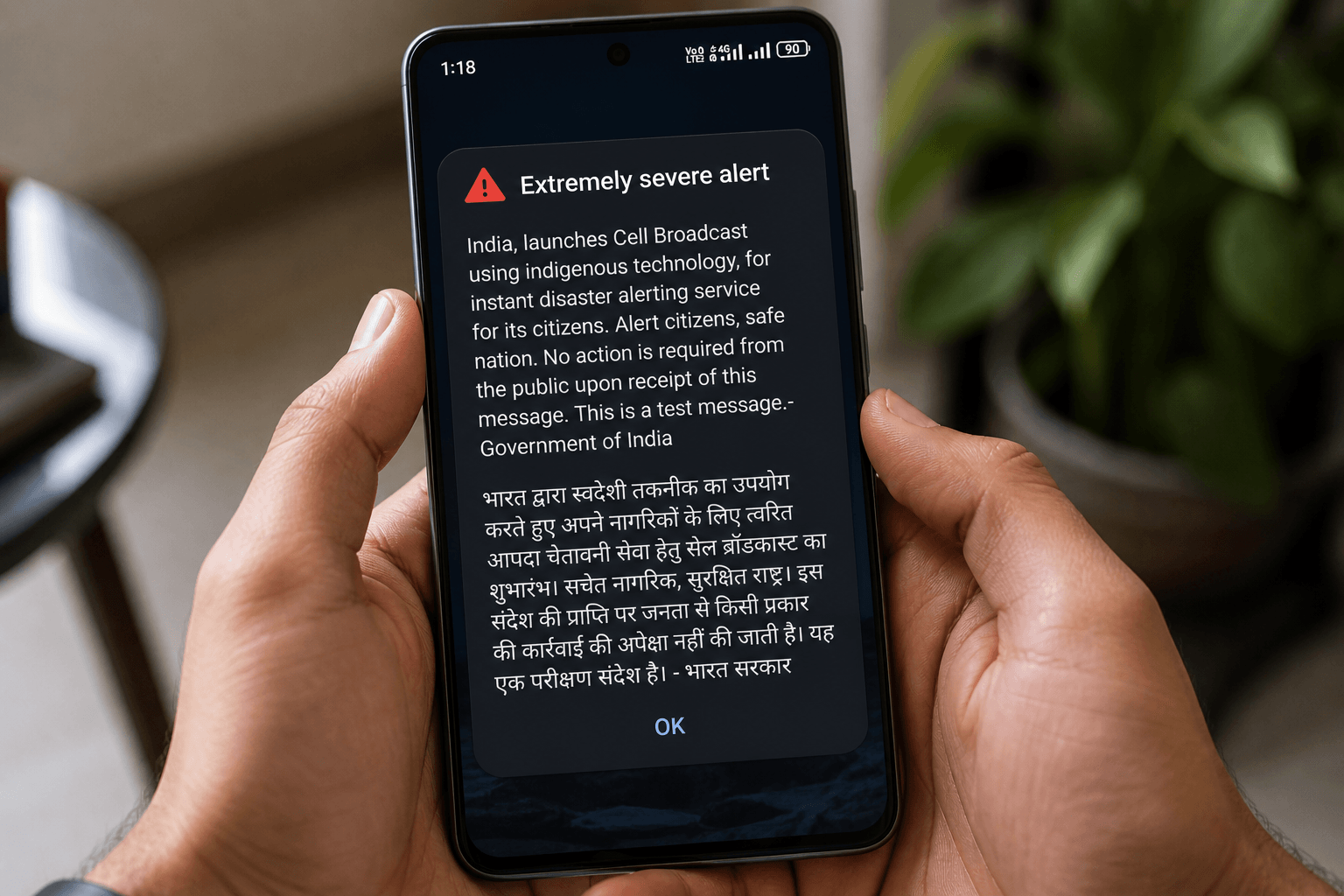
For a brief moment, millions across India were startled by a loud notification flashing “Extremely Severe” on their phones. The alert cut through silent modes and grabbed immediate attention—prompting confusion and concern.
It wasn’t a real emergency. Instead, it was part of a nationwide test of India’s emergency alert system, aimed at strengthening disaster preparedness.
What Happened During the Emergency Alert Test
The Government of India recently carried out a large-scale test of its cell broadcast-based disaster alert system, sending high-priority messages to mobile users across several regions.
These alerts:
- Appeared prominently on phone screens
- Were accompanied by a loud warning sound
- Overrode silent and do-not-disturb settings
Officials later confirmed that:
- The alert was intentional and part of a system test
- It was conducted in coordination with telecom operators
- The goal is to enable real-time disaster warnings during emergencies
The system uses cell broadcast technology, allowing authorities to send alerts to all devices within a geographic area—without needing individual phone numbers.
Public Reaction and Government Response
Confusion Among Users
Because many users were not informed in advance, the alert triggered immediate reactions:
- Some believed a real disaster was unfolding
- Social media filled with screenshots and questions
- Concerns emerged about the lack of prior communication
Official Clarification
Authorities clarified soon after that:
- This was a routine preparedness exercise
- More tests may be conducted in the future
- Efforts will be made to better inform the public beforehand
Technology Behind the Nationwide Alert System
The test highlighted how India’s emergency alert system is evolving:
- Built on telecom network integration
- Capable of reaching millions instantly
- Designed to function even during network congestion
Importantly, the system can override device settings—ensuring critical alerts are not missed.
Why This Emergency Alert System Matters
The India emergency alert system test reflects a broader push toward faster and more reliable disaster communication.
Key benefits include:
- Speed: Alerts delivered within seconds
- Targeting: Region-specific warnings
- Scalability: Nationwide reach without delays
However, the test also revealed a crucial gap: clear communication with the public is essential to avoid panic.
Broader Context: Rising Need for Disaster Alerts in India
India’s investment in emergency alert infrastructure comes amid:
- Increasing extreme weather events
- High population density in vulnerable regions
- Past incidents where delayed warnings caused greater damage
Globally, similar systems are already in place:
- The Wireless Emergency Alerts (WEA) system in the United States
- Japan’s advanced earthquake early warning system
India’s initiative aligns with this global shift toward real-time public safety technology.
What Comes Next
Following this nationwide test, several improvements are expected:
- Better communication before test alerts
- Integration with weather and seismic monitoring systems
- Multilingual alerts for wider accessibility
- Increased public awareness about how alerts work
Over time, this system could become a critical tool in reducing disaster-related risks.
Key Takeaways
- India conducted a nationwide emergency alert system test
- Phones displayed an “Extremely Severe” warning message
- The alert caused confusion due to lack of prior notice
- The system uses cell broadcast technology for instant reach
- Future tests will likely focus on clarity and awareness
Conclusion
The sudden “Extremely Severe” alert may have caused momentary panic, but it also highlighted an important step forward. India is actively building a system designed to deliver life-saving information when it matters most.
The technology is powerful—but as this test showed, clear communication will be key to making it truly effective.