Introduction
In a clear sign that the global semiconductor race is far from slowing down, Samsung Electronics is pressing forward with its massive $17 billion chip fabrication plant in the United States. The project—one of the largest foreign investments in U.S. manufacturing—underscores both strategic ambition and geopolitical urgency in reshaping the global chip supply chain.
Main News Details
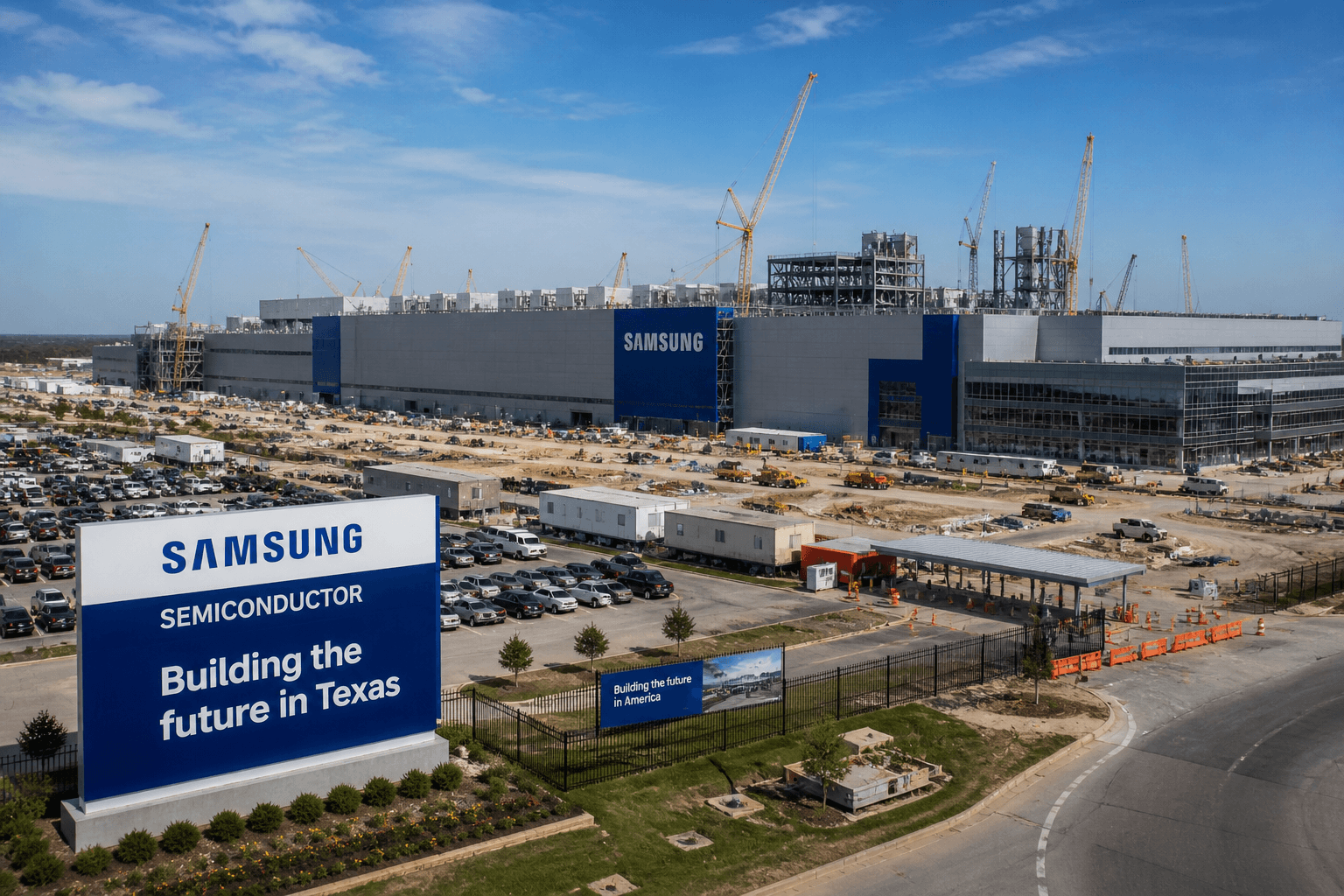
Samsung’s new semiconductor facility, located in Taylor, Texas, remains under active development despite a mix of economic headwinds, construction delays, and shifting demand in the global chip market.
Originally announced in 2021, the plant is expected to produce advanced logic chips used in applications ranging from smartphones and AI systems to high-performance computing. While timelines have faced adjustments, Samsung has reaffirmed its commitment to completing the project and ramping production in the coming years.
The investment aligns with broader efforts by the United States to reduce reliance on Asian chip manufacturing hubs and strengthen domestic production capabilities. Incentives tied to the CHIPS and Science Act have played a role in maintaining momentum for such large-scale projects.
Key Developments & Reactions
Delays and Market Conditions
Samsung’s project has encountered slower-than-expected progress, partly due to supply chain disruptions and a cooling semiconductor market following pandemic-driven demand spikes. The company has had to recalibrate timelines while maintaining long-term investment confidence.
Competitive Pressure
The move comes amid fierce competition from rivals like Intel and TSMC, both of which are also expanding U.S.-based manufacturing footprints. This intensifies the race to secure leadership in advanced chip production.
Government Support
U.S. policymakers have consistently emphasized the importance of domestic chip manufacturing for national security and economic resilience. Samsung’s project is often cited as a cornerstone example of international collaboration aligned with these goals.
Why It Matters
The implications of Samsung’s continued investment extend well beyond a single factory:
- Supply Chain Security: Reduces dependence on overseas chip production, particularly in geopolitically sensitive regions.
- Economic Impact: Creates thousands of jobs and stimulates local economies in Texas and beyond.
- Technological Leadership: Supports development of cutting-edge chips critical for AI, 5G, and defense systems.
Broader Context
The semiconductor industry has become a focal point of global competition. Over the past decade, production has been heavily concentrated in East Asia, with Taiwan and South Korea dominating advanced chip manufacturing.
However, disruptions during the COVID-19 pandemic exposed vulnerabilities in this model. Governments worldwide—including the U.S., European Union, and Japan—have since launched aggressive initiatives to localize chip production.
Samsung, already a leader in memory chips, has been expanding aggressively into advanced logic chip manufacturing to compete more directly with TSMC.
Future Implications
Looking ahead, Samsung’s Texas facility could play a pivotal role in reshaping the semiconductor landscape:
- Expansion Potential: The site has room for future investment phases that could multiply its capacity.
- AI Boom Alignment: Rising demand for AI chips could accelerate the plant’s strategic importance.
- Geopolitical Leverage: Strengthens U.S.-South Korea technological alliances amid growing tensions with China.
Still, execution risks remain. Cost overruns, talent shortages, and cyclical demand swings could influence how quickly the plant reaches full operational capacity.
Key Takeaways
- Samsung is continuing construction of its $17 billion chip plant in Texas despite delays.
- The facility is part of a broader push to localize semiconductor manufacturing in the U.S.
- Competition with Intel and TSMC is intensifying the global chip race.
- The project carries major implications for supply chains, national security, and economic growth.
- Long-term success will depend on market conditions and execution efficiency.
Conclusion
Samsung’s persistence with its Texas chip factory highlights a defining shift in the global tech landscape—where semiconductors are no longer just components, but strategic assets. While challenges remain, the project signals confidence in long-term demand and reinforces the growing importance of localized, resilient supply chains in an increasingly uncertain world.