Introduction
In a breakthrough that pushes the boundary between biology and technology, scientists have successfully developed artificial neurons that can directly communicate with human brain cells. This is not just a conceptual leap—it’s a functional, real-world interaction between silicon-based systems and living neurons.
For the tech ecosystem, this marks a critical milestone in brain–computer interfaces (BCIs), neuromorphic computing, and next-generation healthcare technologies.
What Are Artificial Neurons?
Artificial neurons are engineered systems designed to replicate how biological neurons process and transmit information.
Unlike traditional AI models that run purely in software, these artificial neurons are:
- Built using neuromorphic hardware (silicon circuits)
- Designed to mimic action potentials (electrical spikes in the brain)
- Capable of real-time adaptive behavior
This allows them to operate in a way that is structurally closer to the human brain than conventional computing systems.
The Breakthrough: Direct Communication With Brain Cells
Researchers demonstrated that artificial neurons can:
- Send electrical signals to biological neurons
- Trigger responses in living brain cells
- Receive feedback and adjust behavior dynamically
This creates a two-way communication loop between machines and biology, a key requirement for true brain–machine integration.
Who Is Behind This Research?
This breakthrough is the result of ongoing work across multiple leading institutions in neuroscience and engineering, including:
- University of Bath – early work on artificial neuron–biological neuron interaction
- ETH Zurich – neuromorphic systems and brain interfaces
- University of Zurich – bioelectronic neural communication
- Stanford University – advanced brain–computer interface research
- MIT – AI and neuromorphic engineering
These teams are working at the intersection of bioengineering, neuroscience, and artificial intelligence.
How It Works: The Full Technical Process
To understand the significance of this achievement, it’s important to break down how scientists actually made this connection possible.
1. Designing the Artificial Neuron (Neuromorphic Hardware)
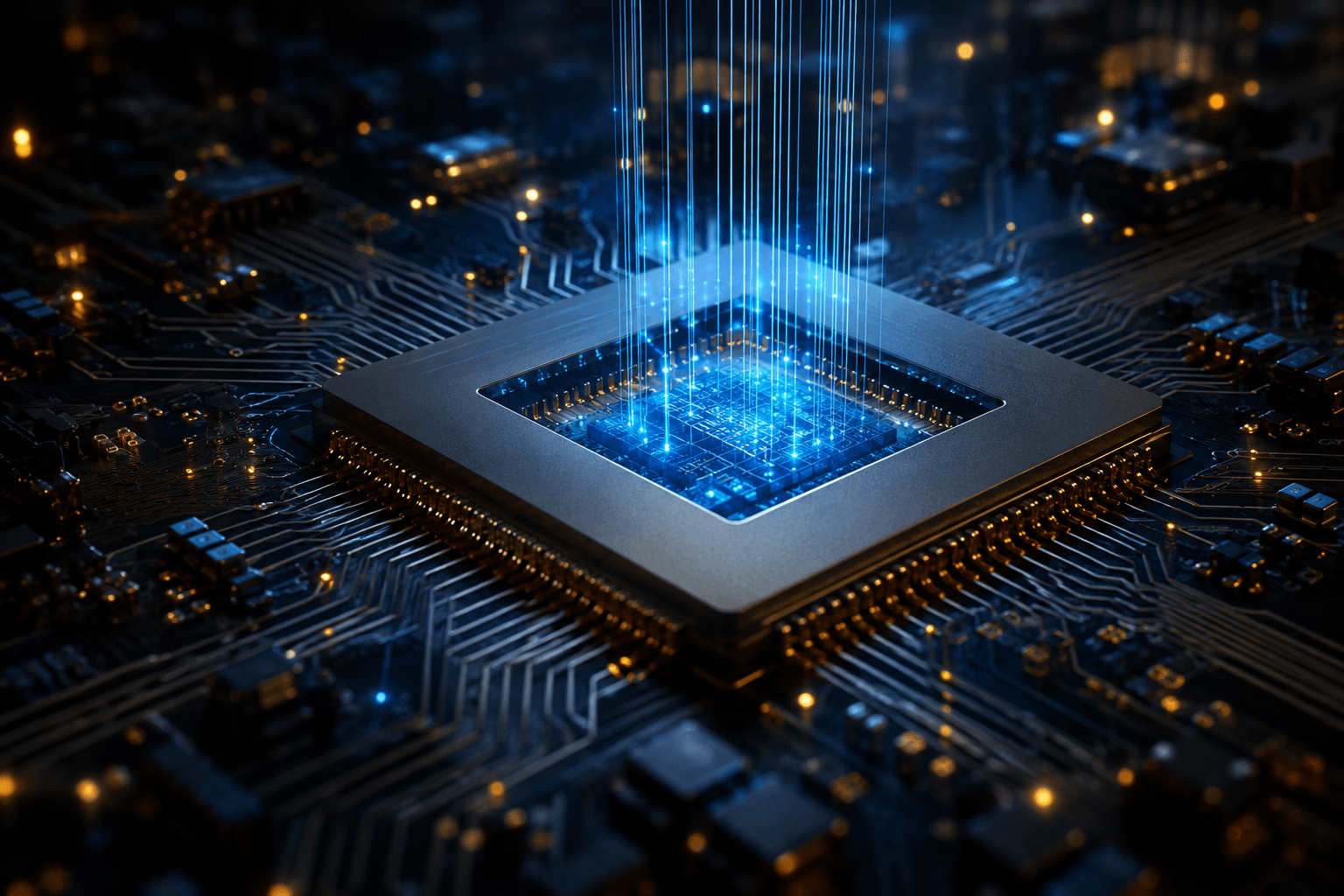
Researchers first built a neuromorphic chip—a hardware-based artificial neuron.
Key characteristics:
- Replicates spiking behavior of real neurons
- Uses analog circuits instead of purely digital computation
- Supports dynamic signal adaptation
This is fundamentally different from software AI—it behaves like a physical neuron.
2. Preparing Living Neurons
Biological neurons used in experiments are typically:
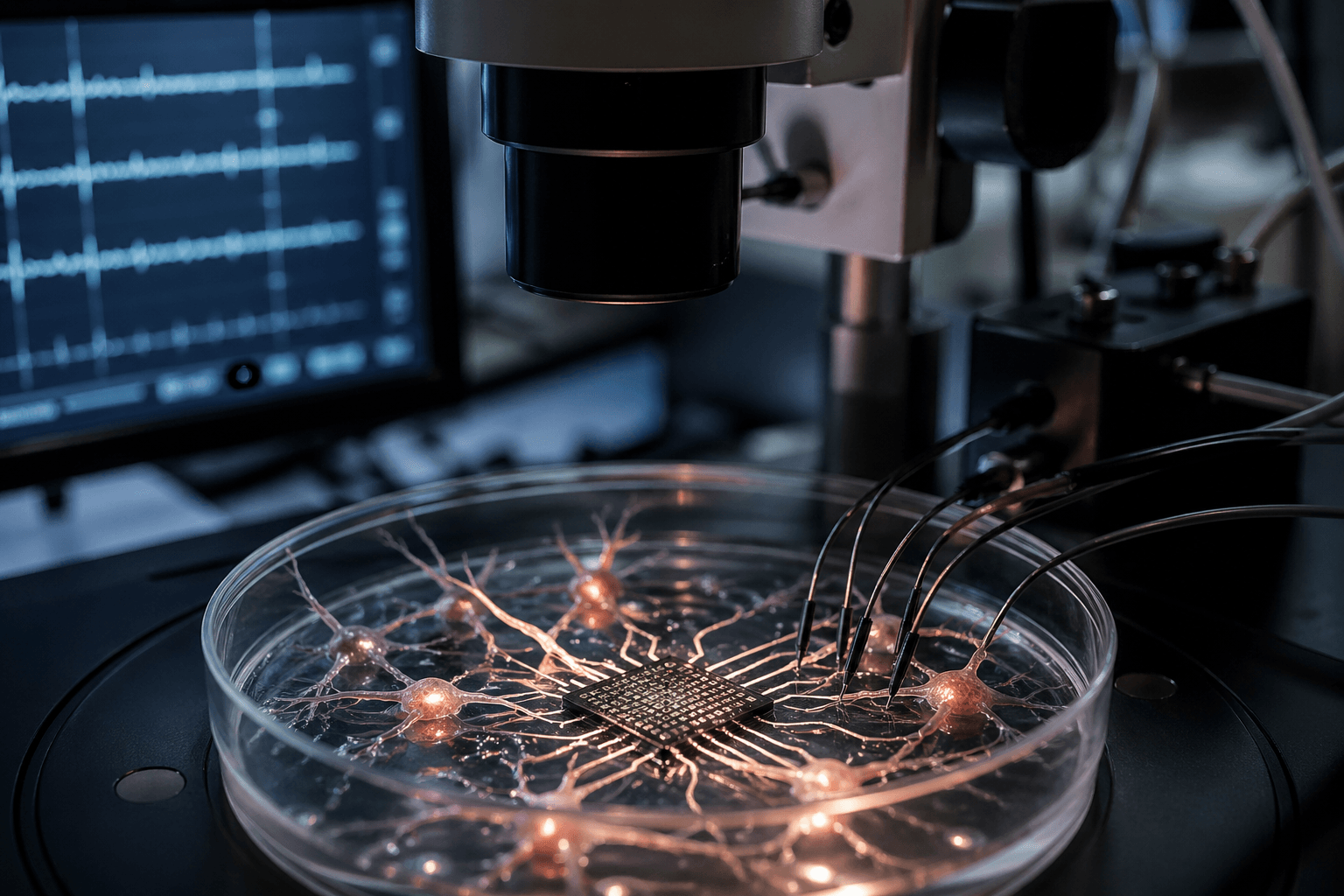
- Cultured in controlled lab environments (in vitro)
- Derived from animal models or stem cells
- Maintained using nutrient-rich solutions and stable conditions
These neurons form small functional neural networks that can respond to stimuli.
3. Building the Interface (Microelectrode Systems)
The most critical step is connecting the two systems.
Scientists used microelectrode arrays (MEAs) to:
- Link artificial neurons with biological neurons
- Transmit electrical signals between them
- Record neural responses in real time
This interface acts as a bridge between silicon circuits and living tissue.
4. Signal Calibration and Synchronization
Biological neurons and electronic systems operate very differently. To enable communication, researchers had to:
- Match voltage ranges
- Align signal timing and frequency
- Adapt to biological variability and noise
This calibration ensures that signals are interpreted correctly on both sides.
5. Establishing Two-Way Communication
Once aligned:
- The artificial neuron sends an electrical signal → biological neuron fires
- The biological neuron responds → artificial neuron detects the signal
This creates a closed-loop system, enabling continuous interaction.
6. Real-Time Adaptation and Learning
Advanced systems incorporate adaptive mechanisms:
- Artificial neurons adjust based on biological feedback
- Signal patterns evolve over time
- Communication becomes more stable and efficient
This mimics a basic form of learning between machine and brain cells.
Where Was This Research Conducted?
This work has been carried out in leading neuroscience and engineering labs across:
- 🇬🇧 United Kingdom – University of Bath
- 🇨🇭 Switzerland – ETH Zurich and University of Zurich
- 🇺🇸 United States – Stanford University and MIT
Most experiments are currently conducted in controlled lab environments (in vitro), rather than in human subjects.
Why This Matters
1. Transforming Neurological Treatments
This technology could enable:
- Direct repair of damaged neural circuits
- Restoration of lost sensory functions
- Advanced treatments for conditions like Parkinson’s and paralysis
2. Next-Generation Brain–Computer Interfaces
With direct neuron-level communication:
- Faster and more precise BCIs become possible
- Improved control of prosthetics and digital systems
- Real-time brain interaction with external devices
3. Advancing Artificial Intelligence
This research contributes to:
- More biologically accurate AI systems
- Development of neuromorphic computing architectures
- Hybrid human–machine intelligence models
Real-World Applications
Emerging use cases include:
- Thought-controlled prosthetic limbs
- Brain-driven communication systems
- Neuro-rehabilitation technologies
- Cognitive enhancement tools
These applications could redefine how humans interact with technology.
Future Implications and Challenges
What’s Next
- Scalable neuron–machine integration
- Implantable neural interfaces
- Enhanced sensory and cognitive capabilities
Challenges
- Ethical concerns around brain integration
- Neural data privacy risks
- Long-term safety of implanted systems
Key Takeaways
- Artificial neurons can now directly communicate with biological brain cells
- The system enables real-time, two-way interaction
- Built using neuromorphic hardware and microelectrode interfaces
- Strong potential in healthcare, AI, and human–machine interaction
- Still in early stages, with major ethical and technical challenges ahead
Conclusion
The successful integration of artificial neurons with human brain cells marks a defining moment in modern science and technology. It signals a shift from external interfaces to deep biological integration, where machines don’t just interact with humans—they communicate at the level of life itself.
As this field evolves, it will not only reshape medicine and computing but also challenge how we define intelligence, identity, and the boundary between human and machine.