Introduction
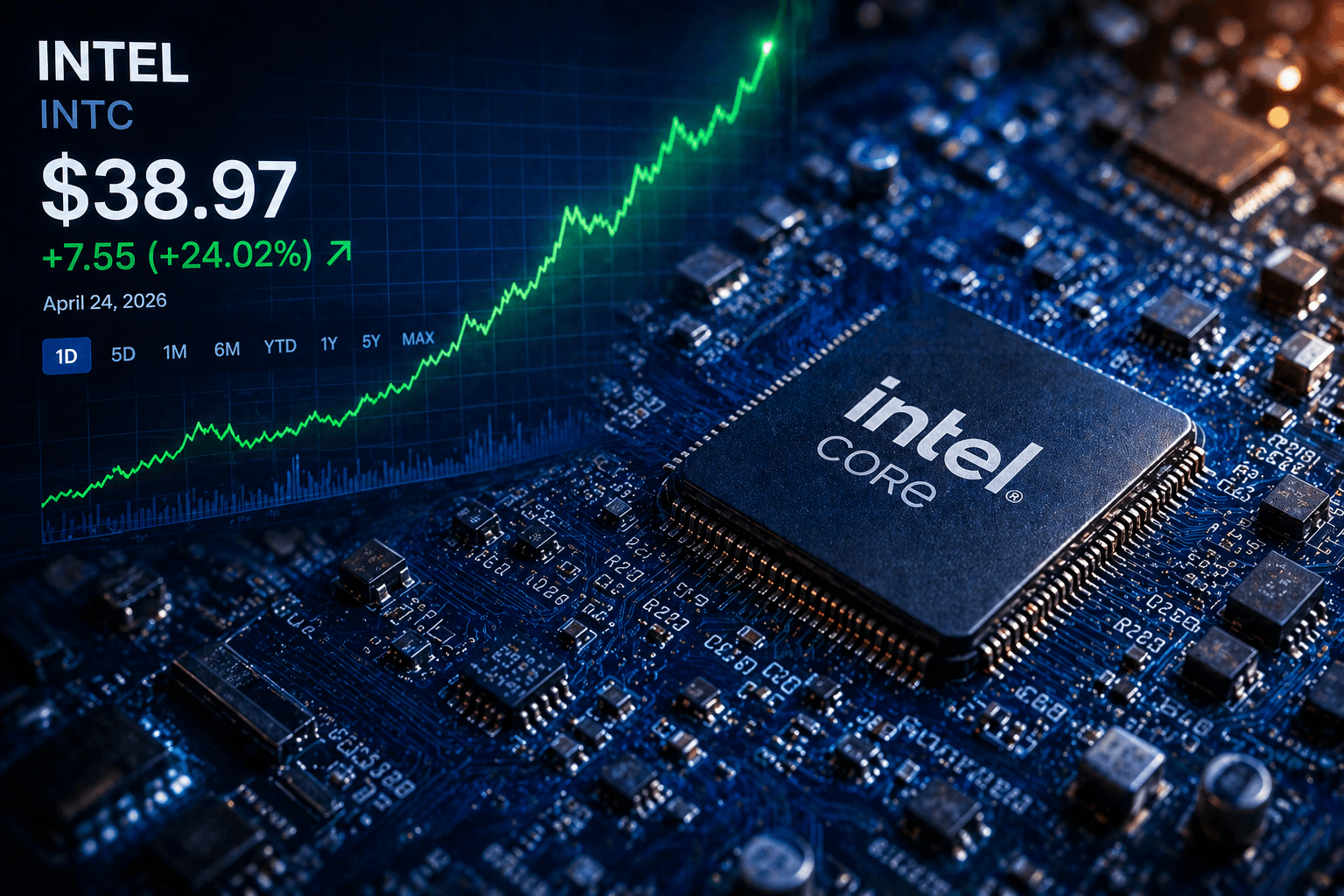
The Intel stock surge has become one of the biggest semiconductor stories of 2026. Shares of Intel jumped nearly 24% in a single day, marking the company’s largest gain since 1987.
This sudden move didn’t just impact Intel—it triggered a broader rally across the semiconductor sector, lifting companies like AMD and NVIDIA.
More importantly, this surge highlights a deeper shift: the AI chip race is entering a new and more competitive phase.
What Caused the Intel Stock Surge?
A Historic Market Move
The recent Intel stock surge stands out as a rare event in modern markets. Gains of this scale usually happen when:
- Earnings exceed expectations
- Strategic direction improves
- Investor confidence shifts rapidly
In this case, the rally reflects growing belief that Intel can reposition itself in the fast-growing AI chip market.
Ripple Effect Across Semiconductor Stocks
The impact of the Intel stock surge quickly spread across the industry:
- AMD recorded strong gains
- NVIDIA continued its upward trend
- Semiconductor indices and ETFs moved higher
This shows that the rally is not isolated—it signals broader optimism in the semiconductor sector.
Why the Intel Stock Surge Matters
AI Is Powering Semiconductor Growth
The Intel stock surge reinforces a key trend: artificial intelligence is now the main driver of chip demand.
AI workloads require:
- High-performance processors
- Advanced GPUs
- Specialized accelerators
If Intel captures even a small share of this demand, it could significantly improve its market position.
Rising Competition in AI Chips
For years, NVIDIA has dominated AI hardware, while AMD has emerged as a strong competitor.
The Intel stock surge suggests:
- A potential comeback for Intel
- Increased competition in AI chips
- Faster innovation across the industry
More competition typically leads to better technology and lower costs over time.
Shift in Investor Sentiment
Another key takeaway from the Intel stock surge is changing investor perception.
This rally indicates:
- Renewed confidence in Intel’s long-term strategy
- Growing interest in diversified semiconductor investments
- Strong belief in sustained AI-driven growth
Markets often anticipate future trends, and this surge reflects positive expectations for Intel’s role in AI.
Real-World Impact of the Intel Stock Surge
For Businesses
- More competition among chip suppliers
- Potential cost advantages
- Faster innovation cycles
For Developers and Engineers
- Access to a wider range of AI hardware
- Improved performance tools
- More flexible deployment options
For Consumers
- Faster AI-powered applications
- Better performance in devices
- Potential price improvements over time
Future Implications for the Semiconductor Industry
Expansion of the AI Chip Market
The Intel stock surge aligns with rapid growth in AI semiconductors. The market is expected to expand significantly in the coming years, driven by data centers and AI applications.
Increased Investment and Innovation
Intel is likely to:
- Increase R&D spending
- Expand manufacturing capabilities
- Strengthen partnerships in AI ecosystems
This could reshape the competitive landscape of the semiconductor industry.
Intensifying Global Chip Competition
The surge also reflects a broader global trend:
- Countries investing in domestic chip production
- Supply chains becoming more localized
- Increasing geopolitical importance of semiconductors
Intel’s momentum could play a critical role in this evolving landscape.
Key Takeaways
- The Intel stock surge reached nearly 24%, the largest since 1987
- The rally boosted the entire semiconductor sector
- AI demand continues to drive industry growth
- Competition in AI chips is increasing
- Investor confidence in Intel is improving
Conclusion
The Intel stock surge is more than just a short-term market reaction. It signals a meaningful shift in the semiconductor industry, especially in the context of AI-driven growth.
As the demand for AI chips continues to rise, competition among companies like Intel, NVIDIA, and AMD will shape the future of technology.