Introduction
Germany is set to undertake one of the largest fiscal expansions in its post-war history after unveiling a draft federal budget for 2027 that proposes €203.6 billion in new borrowing. The spending plan marks a decisive break from the country’s long-standing commitment to fiscal restraint, with the government prioritizing large-scale investment in defense, infrastructure, and economic modernization.
The draft budget follows fiscal reforms adopted in 2025 that relaxed Germany’s constitutional borrowing limits, allowing significantly higher public investment in response to economic and geopolitical challenges.
2027 Budget Unveils Record Borrowing Plan
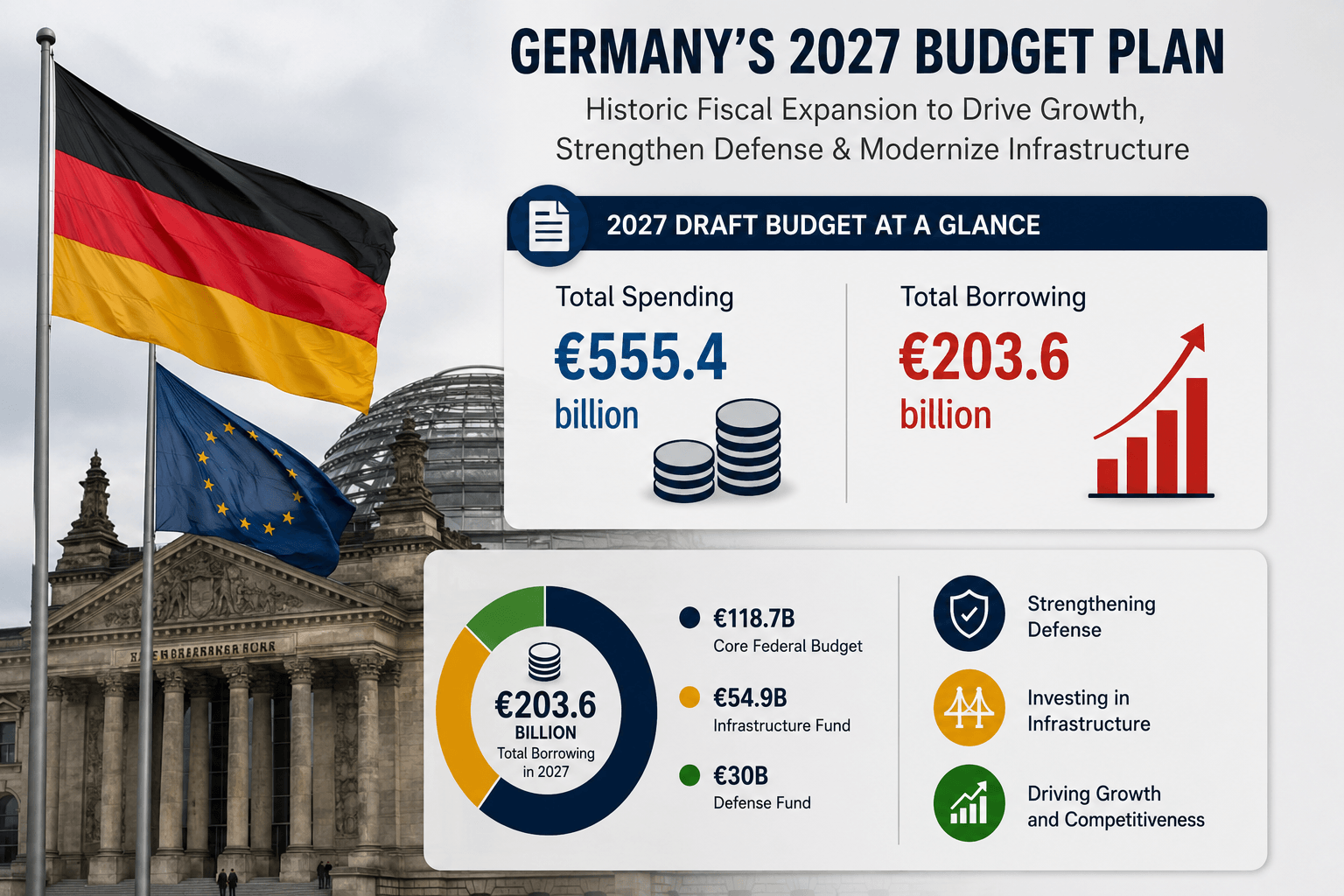
The German government is expected to approve a draft federal budget totaling €555.4 billion in expenditure for 2027, financed in part through €203.6 billion in borrowing. The planned borrowing exceeds the government’s earlier projection of €196.5 billion and represents a substantial increase from the approximately €50.5 billion borrowed in 2024 under the previous administration.
The proposed borrowing will come from three primary sources:
- €118.7 billion through the core federal budget.
- €54.9 billion from a dedicated infrastructure investment fund.
- €30 billion through Germany’s special defense fund.
The government says the expanded fiscal program is designed to reverse years of underinvestment in public infrastructure, strengthen Germany’s defense capabilities, support economic growth, improve industrial competitiveness, and respond to evolving security requirements following Russia’s invasion of Ukraine.
Key Facts and Developments
Germany Eases Debt Brake to Enable Higher Borrowing
The 2027 budget is built on major fiscal reforms approved in 2025 that eased Germany’s constitutional borrowing restrictions, known as the “debt brake” (Schuldenbremse).
The reforms include:
- Greater flexibility to borrow for defense spending.
- Creation of a €500 billion infrastructure and climate investment fund.
- Expanded borrowing capacity for Germany’s federal states (Länder).
These measures represent one of the most significant changes to German fiscal policy in decades, ending a long period during which balanced budgets and limited borrowing were central government priorities.
Defense Spending to Rise Sharply
Defense is one of the largest components of the new fiscal strategy.
The draft budget allocates approximately €109 billion in core defense spending for 2027.
Including funding for Ukraine assistance, intelligence services, and broader national security programs, Germany’s total defense and security expenditure is expected to reach approximately €130.1 billion.
The government also plans to increase defense spending to roughly 3.5% of GDP by 2029, aligning with higher NATO defense spending expectations.
Infrastructure Investment Remains a Key Priority
Infrastructure modernization is another central objective of the fiscal expansion.
The investment program will fund projects including:
- Roads
- Bridges
- Railways
- Transport infrastructure
- Digital infrastructure
- Hospitals
- Energy systems
- Climate-related investments
Total public investment is expected to reach €117.5 billion in 2027, nearly €40 billion more than previously planned.
The broader €500 billion infrastructure fund is intended to address years of underinvestment while improving Germany’s long-term productivity and competitiveness.
Economic Objectives
The government expects the borrowing program to:
- Stimulate economic growth.
- Increase productivity through infrastructure upgrades.
- Encourage private-sector investment.
- Modernize industrial capacity.
- Strengthen national security.
- Improve Germany’s long-term competitiveness.
The European Central Bank has indicated that Germany’s higher spending on infrastructure and defense is expected to support domestic demand across the euro area from 2026 onward.
Risks and Challenges
Economists have highlighted several potential risks, including:
- Higher public debt.
- Rising debt-servicing costs.
- Budget pressures from pensions, healthcare, and interest payments.
- Challenges in delivering large infrastructure projects efficiently.
- Reduced fiscal flexibility if economic growth remains weak.
Budget Approval Timeline
The 2027 budget has not yet been finalized.
The expected process includes:
- Cabinet approval of the draft budget.
- Parliamentary debate beginning in September.
- Final parliamentary approval before the end of the year.
Why It Matters
Germany is the eurozone’s largest economy, making its fiscal decisions important for Europe. The proposed borrowing plan represents a significant shift toward debt-financed investment, with infrastructure renewal and defense modernization at the center of the government’s long-term economic strategy.
Conclusion
Germany’s proposed 2027 budget marks a historic change in the country’s fiscal policy. By planning €203.6 billion in borrowing to finance a €555.4 billion budget, the government is moving away from decades of fiscal restraint in favor of large-scale public investment. The plan underscores Germany’s commitment to strengthening national security, modernizing infrastructure, and supporting long-term economic competitiveness through expanded government spending.