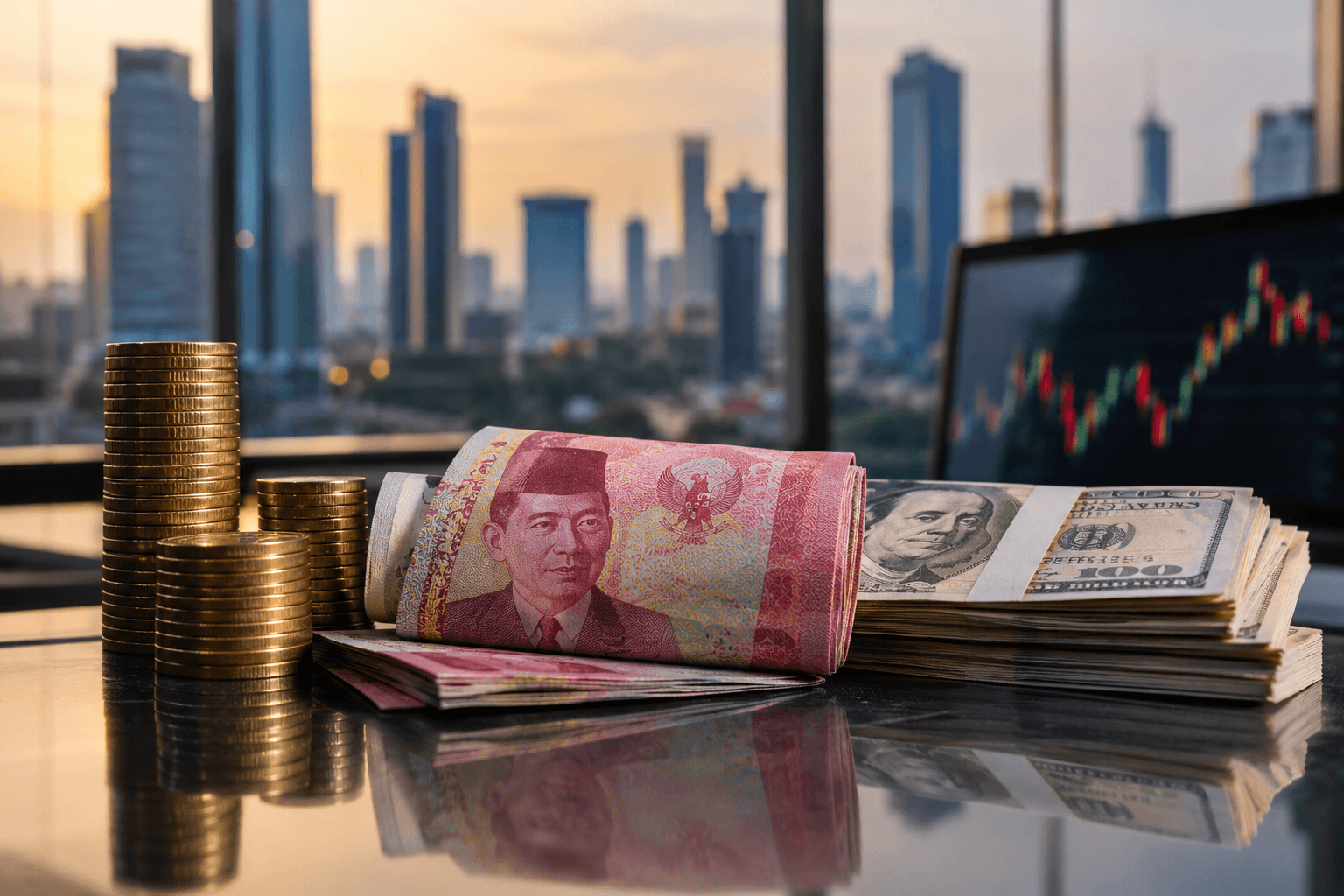
Bank Indonesia has adjusted its deposit facility rate and foreign-exchange incentives to support the rupiah amid continued pressure on the Indonesian currency. The move aims to stabilize the currency, encourage foreign capital inflows and maintain stability in the domestic financial market.
What Has Changed?
Bank Indonesia has raised its deposit facility rate by 25 basis points to 5%, while keeping its benchmark BI-Rate unchanged at 5.75%. The lending facility rate remains at 6.50%.
The central bank is also strengthening incentives related to foreign-exchange transactions and currency hedging, including domestic non-deliverable forwards (DNDFs). These measures are intended to improve market liquidity and help investors manage exchange-rate risks.
Why Is Indonesia Taking These Measures?
The rupiah has come under pressure from tighter US monetary conditions, escalating geopolitical tensions and concerns about foreign investment in Indonesian financial markets. These factors have weighed on investor sentiment and increased the risk of capital outflows from the country.
Concerns have also intensified following MSCI’s warning over Indonesia’s equity market classification, raising questions about market accessibility and transparency. The prospect of a change in classification could affect foreign investors’ exposure to Indonesian stocks and add to pressure on the rupiah.
The currency traded at Rp17,985 per US dollar on October 20, following a 0.61% depreciation from the end of September, according to the figures cited in the report.
By raising its deposit facility rate and strengthening foreign-exchange incentives, Bank Indonesia aims to make rupiah-denominated assets more attractive, encourage capital inflows and reduce exchange-rate volatility. Keeping the benchmark BI-Rate unchanged at 5.75% also allows the central bank to address currency pressures without immediately increasing borrowing costs across the wider economy.
What Could Happen Next?
The measures could help stabilize the rupiah if they improve investor confidence and encourage foreign capital inflows. Better access to currency-hedging instruments may also help businesses and investors manage foreign-exchange risks.
However, the impact will depend on global financial conditions and the direction of investment flows. Continued pressure on emerging-market currencies or a decline in confidence toward Indonesian assets could limit the effectiveness of the measures.
Investors will closely monitor the rupiah’s exchange rate, foreign portfolio flows and further policy announcements from Bank Indonesia to assess whether the steps are helping stabilize the currency.