Introduction
Alphabet is accelerating its push into custom AI chips, highlighting a broader shift among hyperscalers looking to reduce dependence on NVIDIA’s dominant AI hardware. As demand for AI computing continues to rise, companies including Alphabet, Amazon, Microsoft, and Meta are investing heavily in proprietary silicon to improve performance and control infrastructure costs.
Main News Details
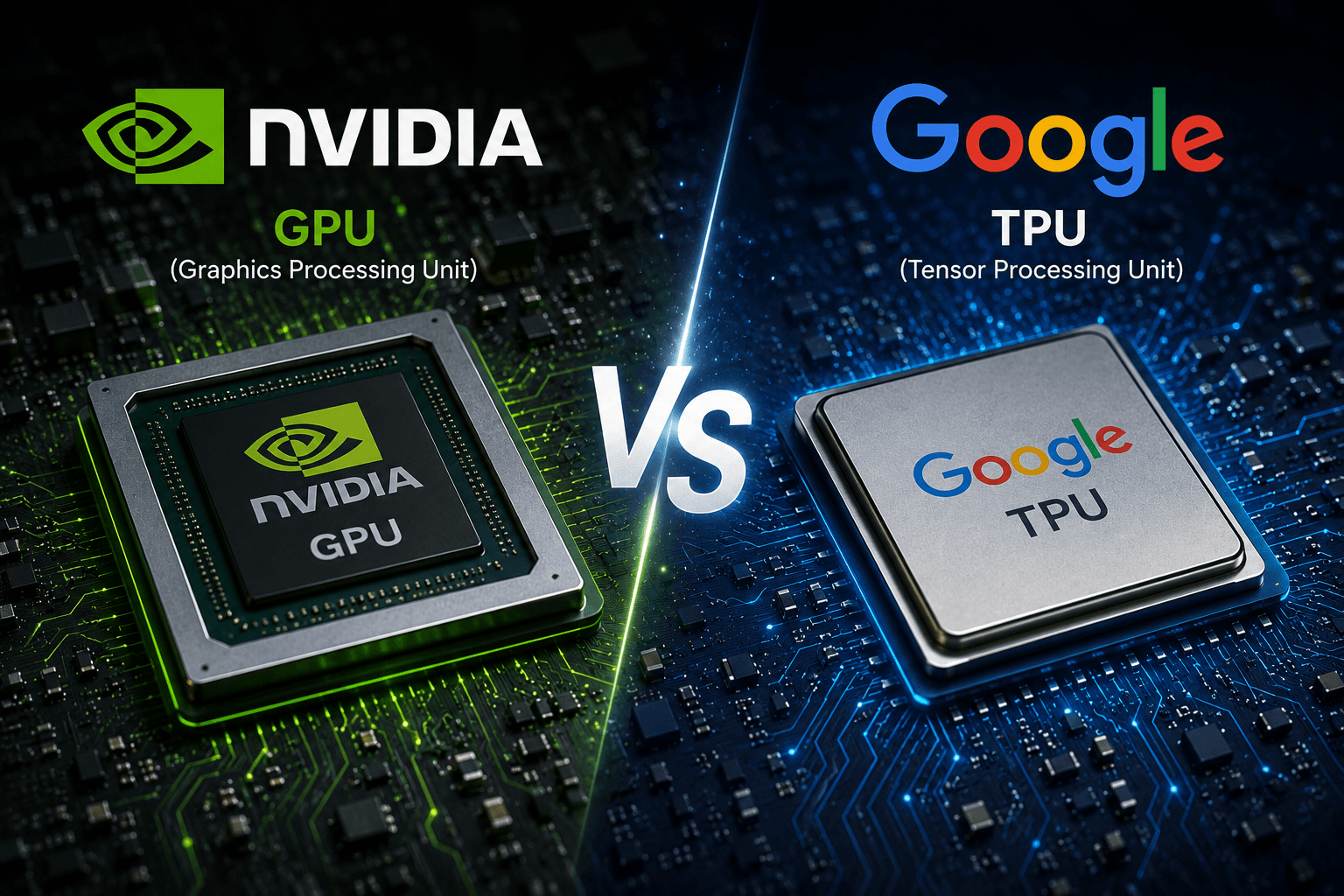
Alphabet’s cloud and AI divisions are expanding the use of Tensor Processing Units (TPUs), the company’s custom-built AI chips designed for training and running advanced AI models. Google has used TPUs internally for years across products such as Search, YouTube, and Gemini, but the chips are now becoming more central to its Google Cloud strategy.
The move comes as NVIDIA continues to dominate the AI chip market with its high-performance GPUs powering much of today’s generative AI boom. However, rising costs and supply limitations have pushed major cloud providers to accelerate development of their own AI processors.
By offering TPUs through Google Cloud, Alphabet aims to attract enterprise customers seeking more efficient and cost-effective AI infrastructure. The company is positioning its chips as an alternative for specific AI workloads that may not require NVIDIA’s premium hardware.
The trend extends across the tech industry. Amazon Web Services has developed Trainium and Inferentia chips, Microsoft is advancing its Maia AI processors, and Meta continues investing in custom AI silicon for internal systems.
Industry analysts see the shift as a strategic effort by hyperscalers to gain more control over AI infrastructure while reducing reliance on external suppliers.
Why It Matters
The rise of custom AI chips could reshape competition in the AI infrastructure market. While NVIDIA remains the clear leader, growing investment from hyperscalers may increase competition, diversify supply chains, and accelerate innovation in AI hardware.
For businesses using cloud AI services, proprietary chips could eventually lower costs and improve efficiency for specialized workloads. The competition over AI hardware is becoming increasingly important as companies race to scale next-generation AI systems.
Conclusion
Alphabet’s expanding TPU strategy reflects a major transition in the AI industry, where leading cloud providers are investing heavily in custom AI chips rather than relying entirely on third-party hardware. Although NVIDIA still dominates the market, the growing push toward in-house AI processors signals a new phase in the battle for AI infrastructure leadership.