Introduction
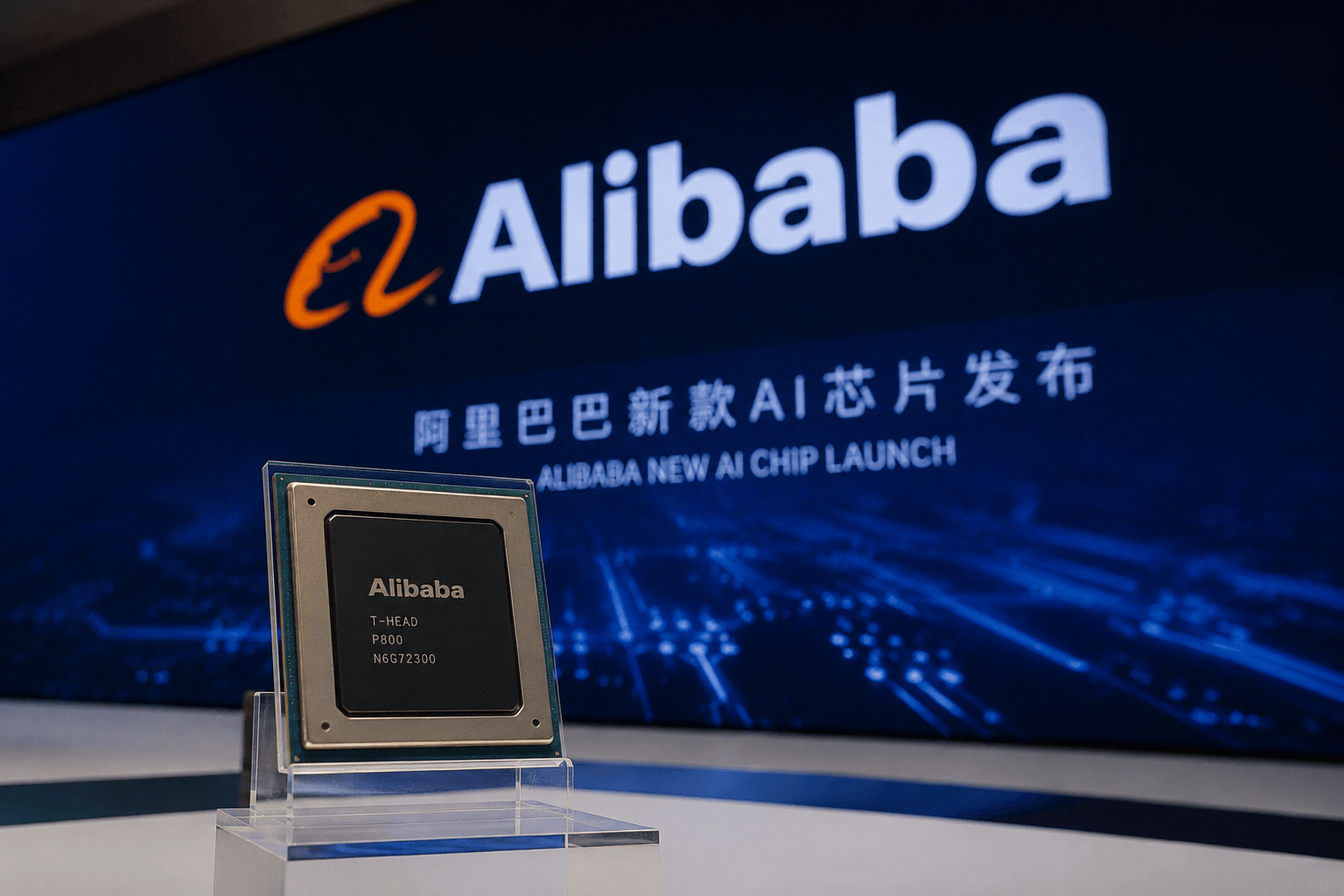
Alibaba has unveiled a new AI chip as part of its broader strategy to strengthen China’s domestic semiconductor industry and reduce reliance on foreign suppliers. The announcement comes as Chinese technology firms continue adapting to tighter U.S. export restrictions on advanced chips.
Alibaba’s New AI Chip
The Chinese tech giant introduced the processor through its cloud computing division, saying the chip is built to handle AI model training and inference tasks more efficiently. Alibaba plans to use the technology to support its expanding cloud services and generative AI platforms.
The company described the launch as another step toward building a more self-sufficient technology ecosystem. Chinese firms have accelerated internal chip development after restrictions limited access to advanced processors from companies such as NVIDIA.
Alibaba has significantly increased investment in AI infrastructure over the past year, including large language models and enterprise AI tools. The new chip is expected to strengthen those efforts while lowering dependence on imported semiconductor technology.
Why the Launch Matters
The release highlights the growing importance of semiconductor independence in the global AI race. Advanced AI systems require powerful computing hardware, making chip access a critical strategic issue for technology companies and governments alike.
For Alibaba, developing domestic AI chips could provide more stable access to computing power while improving its competitiveness in China’s fast-growing AI market. The move also reflects a wider industry shift toward local semiconductor development as geopolitical tensions reshape global supply chains.
Conclusion
Alibaba’s latest AI chip marks another important step in China’s push for homegrown semiconductor technology. As competition in artificial intelligence intensifies, control over advanced computing infrastructure is becoming increasingly vital for long-term growth and innovation.