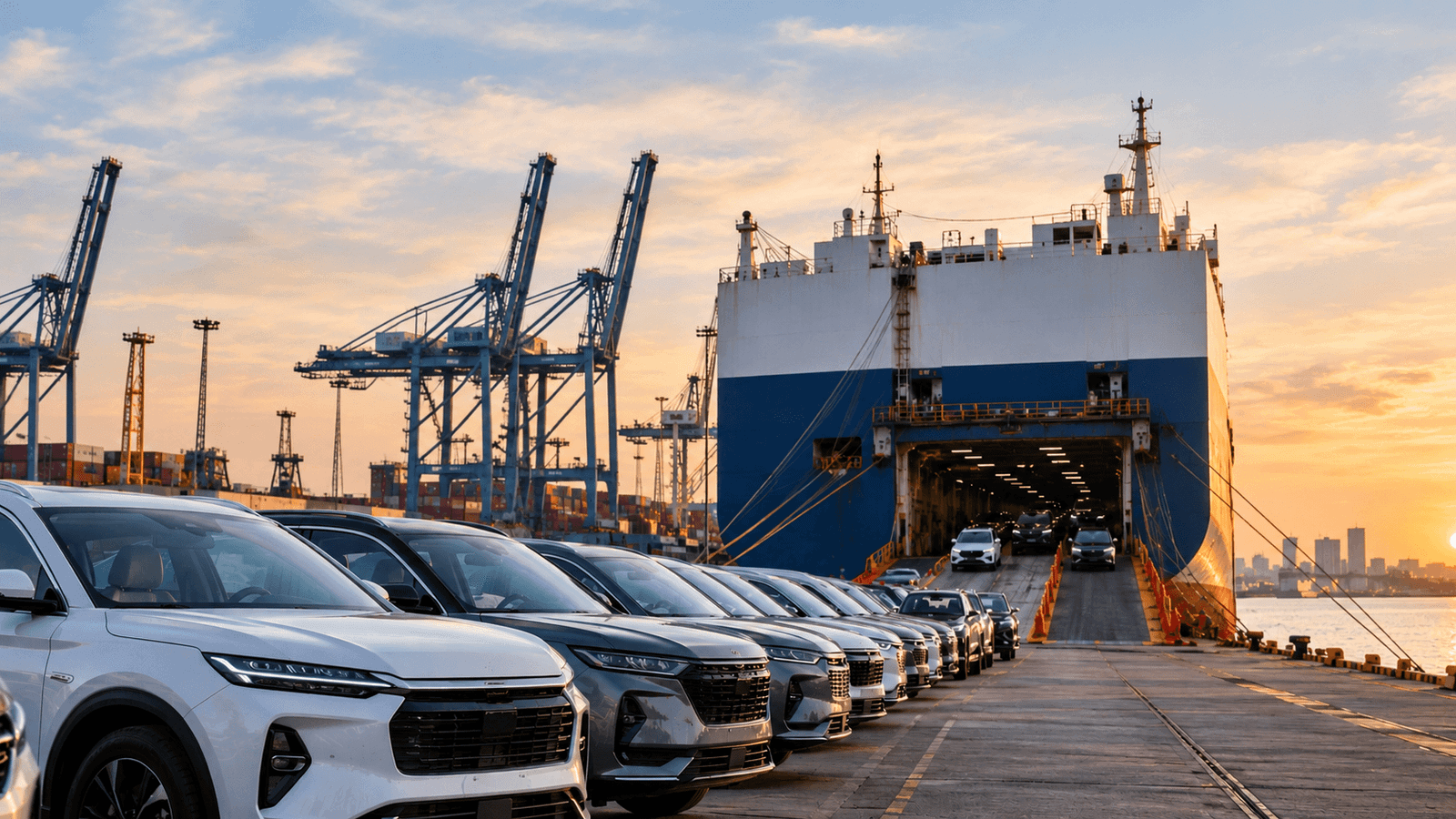
China has clarified the principles governing its hybrid-vehicle trade arrangement with the European Union (EU), stressing non-discrimination, fair treatment and compliance with World Trade Organization (WTO) rules amid growing trade tensions over Chinese vehicle exports.
According to reported trade figures, China’s hybrid-vehicle exports to the EU reached $7.5 billion in the first half of 2026, compared with $2.5 billion during the same period in 2025, marking a threefold increase in export value.
The rapid growth has drawn attention to competition in Europe’s automotive market, particularly as Chinese manufacturers expand their sales of hybrid and plug-in hybrid vehicles following the EU’s additional tariffs on Chinese-made fully electric vehicles introduced in 2024.
China has maintained that any measures governing hybrid-vehicle exports should be based on actual trade conditions and applied without discrimination. It has also emphasised that restrictions must comply with WTO rules and that it reserves the right to address trade disputes through the organisation.
The EU, meanwhile, is seeking to manage the growth of Chinese vehicle imports and protect its domestic automotive industry. Under the reported arrangement, Chinese hybrid and plug-in hybrid exports could face tighter controls, with European Trade Commissioner Maroš Šefčovič indicating that exports could decline by more than half over four years.
Reports have also suggested that the quota for 2027 could begin at around 350,000 vehicles, with annual increases. However, the precise quota and implementation details remain subject to clarification.
The arrangement reflects efforts by Beijing and Brussels to address trade concerns without escalating tensions. For Chinese automakers, Europe remains an important growth market, while European manufacturers are seeking greater protection from increasing competition.
China’s latest clarification underscores its position that any restrictions should be transparent, fair and consistent with international trade obligations. The final implementation of the arrangement will be important in determining its impact on vehicle exports and broader China-EU trade relations.