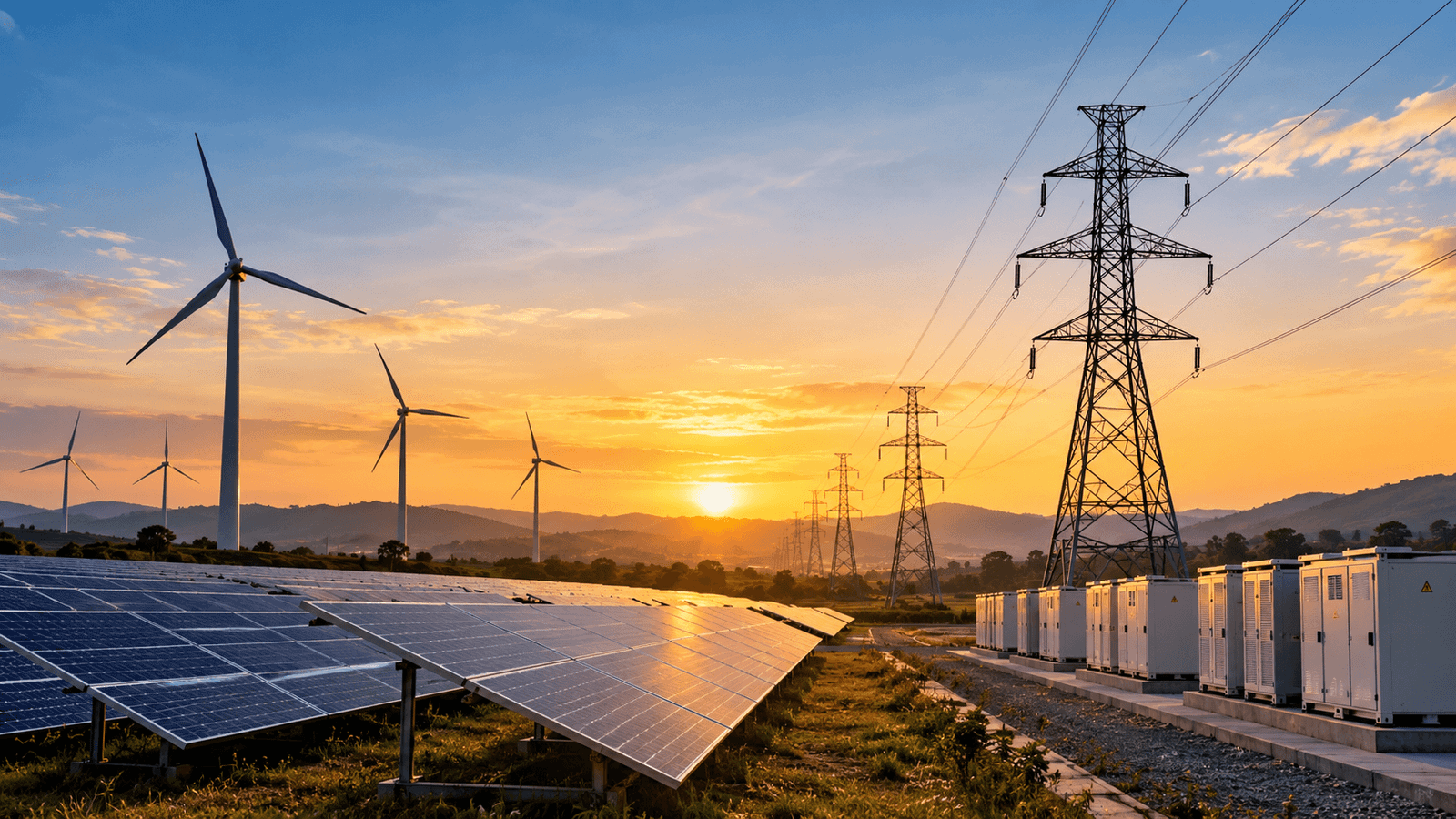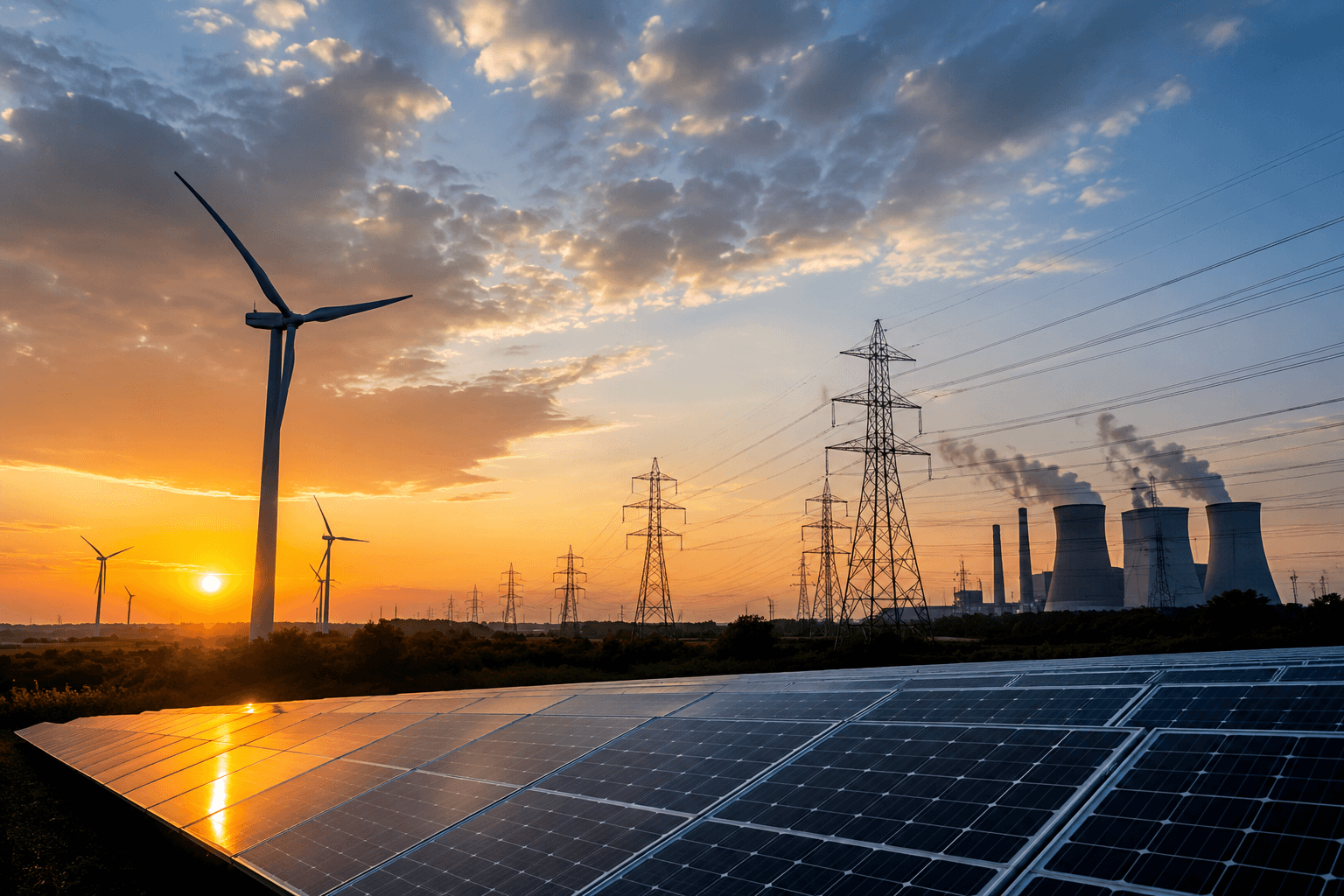
For years, India’s clean energy transition was defined by a single challenge: build more renewable capacity.
Success was measured by how many solar parks were commissioned, how many wind turbines were installed and how quickly renewable capacity expanded.
That challenge is beginning to change.
Within days, two separate developments pointed to the same shift. India recorded its highest-ever monthly renewable electricity generation in July, reducing coal’s share of the country’s power mix to its lowest level in a year. Shortly afterward, the Central Electricity Regulatory Commission (CERC) proposed relief from interstate transmission charges for renewable-energy projects delayed because the transmission network was not ready.
Viewed separately, one story is about record renewable generation and the other about a regulatory proposal.
Viewed together, they reveal something more important.
India’s clean-energy transition is entering a new phase where the central challenge is no longer producing renewable electricity—it is ensuring the power system can move, absorb and balance it efficiently.
A Record Month for Renewable Electricity
India generated 36.25 billion kilowatt-hours (kWh) of electricity from renewable sources in July 2026, the highest monthly total on record.
Renewables accounted for 20% of the country’s total electricity generation, while coal’s share fell from 69% in June to 65.7% in July, its lowest level in a year.
The month also produced another milestone. On 13 July, combined solar and wind generation exceeded 100 gigawatts (GW) for the first time, supplying as much as 42.8% of India’s electricity demand during peak daylight hours.
These figures demonstrate how rapidly renewable energy has expanded. Solar and wind are no longer marginal contributors to the power system. During favourable conditions, they are capable of meeting a substantial share of national electricity demand.
Coal Is Losing Share, Not Importance
The decline in coal’s share does not mean India is using less coal.
In fact, coal-fired generation rose 12.8% year-on-year to 119.4 billion kWh in July.
The difference lies between market share and absolute generation.
India’s electricity demand continues to grow rapidly as rising incomes, industrial activity and higher temperatures increase power consumption. Renewable generation expanded even faster than coal during July, reducing coal’s percentage share of the electricity mix while coal plants still generated more electricity than they did a year earlier.
Coal therefore remains the foundation of India’s power system, particularly during evenings and periods of weak solar or wind generation.
The milestone is not that coal is disappearing.
It is that renewable energy has become large enough to influence the composition of India’s electricity system in a meaningful way.
The Next Constraint Is the Grid
Only days after July’s generation data became public, India’s electricity regulator proposed a seemingly technical change.
The CERC released draft regulations that would allow renewable-energy projects delayed because transmission infrastructure is unavailable to retain waivers on Inter-State Transmission System (ISTS) charges.
At first glance, the proposal appears to be a narrow regulatory adjustment.
In reality, it addresses one of the biggest challenges facing India’s energy transition.
Many renewable projects are completed before the transmission lines needed to carry their electricity are ready. Under existing rules, developers can lose valuable transmission-charge waivers if projects miss commissioning deadlines—even when the delay is caused by the transmission network rather than by the project itself.
The proposed relief seeks to remove that mismatch by protecting developers from costs created by infrastructure outside their control.
When Building Power Plants Becomes Easier Than Moving Electricity
The two developments make more sense when viewed together.
India’s renewable generation is expanding rapidly, but the infrastructure required to transport that electricity is struggling to keep pace.
Transmission lines take years to build. They require land acquisition, environmental approvals, engineering work and coordination across multiple states.
Solar and wind projects, by comparison, can often be completed much faster.
As a result, electricity can be generated before the network is capable of carrying it to consumers.
The consequences are already visible.
Reuters recently reported that India was unable to utilize 8,133 GWh of solar electricity during the April-June quarter because of transmission constraints and grid-security limitations. In other words, the country is beginning to generate clean electricity that parts of the power system cannot always absorb or deliver efficiently.
The Energy Transition Is Becoming More Complex
The first phase of India’s renewable expansion focused on increasing generation capacity.
The next phase will depend increasingly on everything that surrounds those power plants.
Transmission networks must expand to connect renewable-rich regions with demand centres.
Grid operators must balance electricity whose output changes with sunlight and wind conditions.
Battery storage and other forms of system flexibility will become more important as renewable generation accounts for a larger share of the electricity mix.
Success will no longer be determined solely by how many gigawatts of renewable capacity India installs each year.
It will also depend on how efficiently the electricity system can integrate that capacity into daily operations.
Why It Matters
The two developments reported this week tell a story larger than either headline suggests.
India is no longer facing the same clean-energy challenge it faced a decade ago.
The country has demonstrated that it can build renewable generation at scale. July’s record output reflects years of investment in solar and wind capacity.
The next stage is less visible but no less important.
A power system built around growing shares of renewable energy requires stronger transmission networks, greater operational flexibility and regulations that recognise where new bottlenecks are emerging.
The CERC’s proposed transmission-charge relief does not solve those bottlenecks.
What it does signal is that policymakers increasingly recognize where the constraint now lies.
For much of the past decade, India’s energy transition was about generating more clean electricity.
Increasingly, it will be about building an electricity system capable of using all of it.