Introduction
NVIDIA is tightening its control over the AI supply chain as competition across the artificial intelligence industry accelerates. Already dominant in AI chips used to train large language models, Nvidia is now expanding deeper into networking, manufacturing partnerships, software platforms, and data center infrastructure.
The push comes as tech companies scramble to secure AI computing power amid ongoing supply shortages and rising geopolitical pressure surrounding semiconductor production.
Nvidia Expands Its AI Infrastructure Strategy
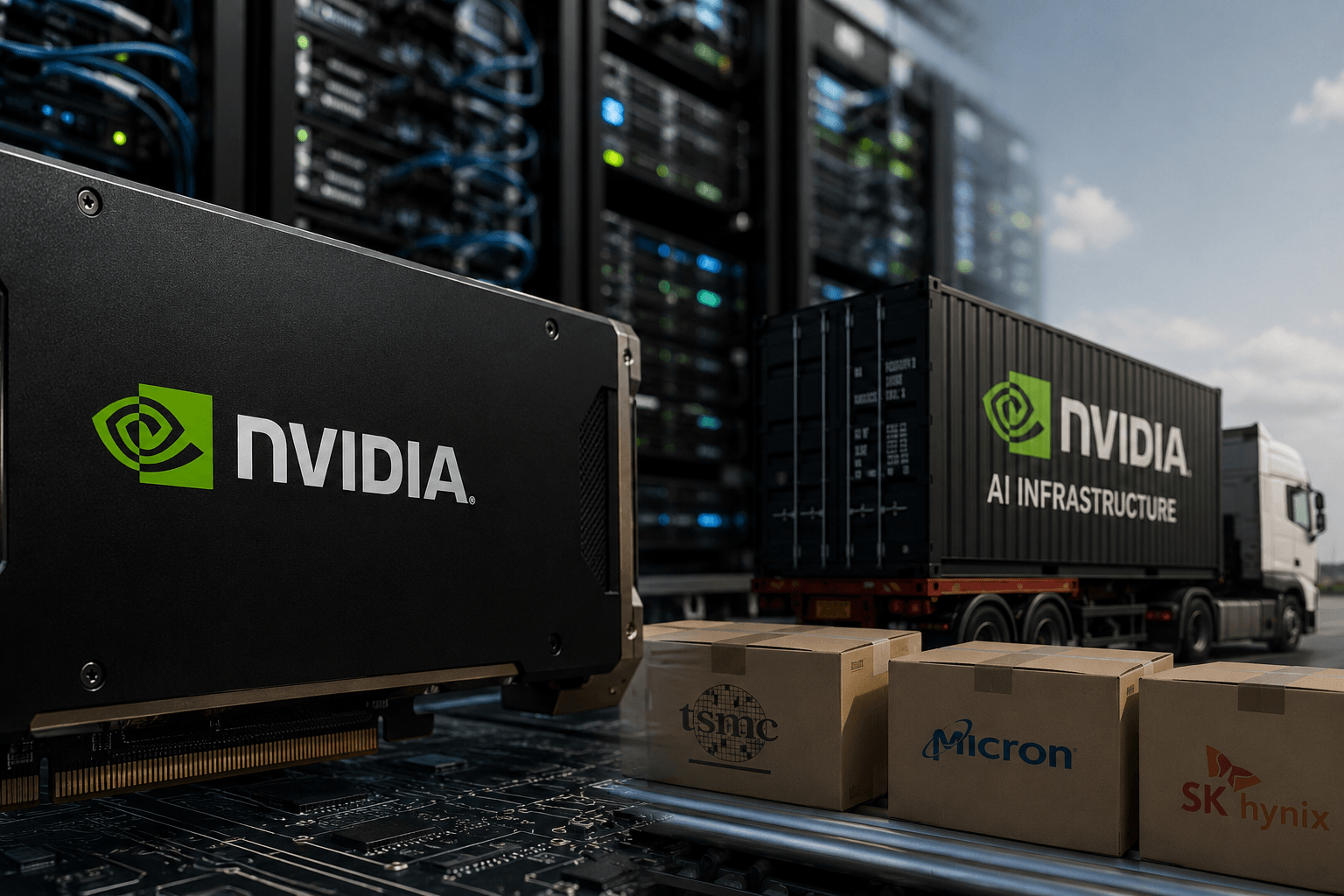
Over the past year, Nvidia has strengthened its position across nearly every layer of the AI ecosystem. Alongside its latest AI chips, including the Blackwell platform, the company has expanded high-speed networking capabilities through technologies acquired from Mellanox while building closer manufacturing ties with Taiwan Semiconductor Manufacturing Company.
Nvidia is also deepening the reach of its CUDA software ecosystem, further embedding its technology into enterprise systems and cloud infrastructure. That strategy makes it increasingly difficult for customers to move to competing AI hardware platforms.
Major cloud providers including Microsoft, Amazon, and Google continue to depend heavily on Nvidia hardware to power AI services, despite investing in their own custom AI chips.
The company has also secured long-term access to advanced chip packaging and high-bandwidth memory supplies — two major bottlenecks in AI server production. Analysts say these supply agreements are helping Nvidia maintain a significant lead as global demand for AI infrastructure continues to outpace manufacturing capacity.
CEO Jensen Huang has repeatedly described AI infrastructure as essential technology, positioning Nvidia as more than a chipmaker and increasingly as the backbone of the AI economy.
Why Nvidia’s AI Supply Chain Control Matters
Nvidia’s growing influence over the AI supply chain could reshape the competitive landscape of the industry. By controlling critical hardware, networking, and software components, the company is becoming the central platform provider for AI computing.
That dominance presents both opportunity and concern. Investors see Nvidia as one of the biggest winners of the AI boom, while regulators and competitors are paying closer attention to how much influence a single company holds over the infrastructure powering modern AI systems.
The strategy also underscores the rising importance of semiconductor supply chains as governments and technology companies compete for leadership in artificial intelligence.
Conclusion
Nvidia is no longer operating solely as a chip company. It is building an integrated AI ecosystem designed to secure long-term influence over the future of AI computing. As adoption accelerates worldwide, control over the AI supply chain may become just as valuable as the technology itself.