Introduction
For more than a decade, the app economy has defined how we use smartphones and digital services. From ordering food to managing finances, everything revolves around apps.
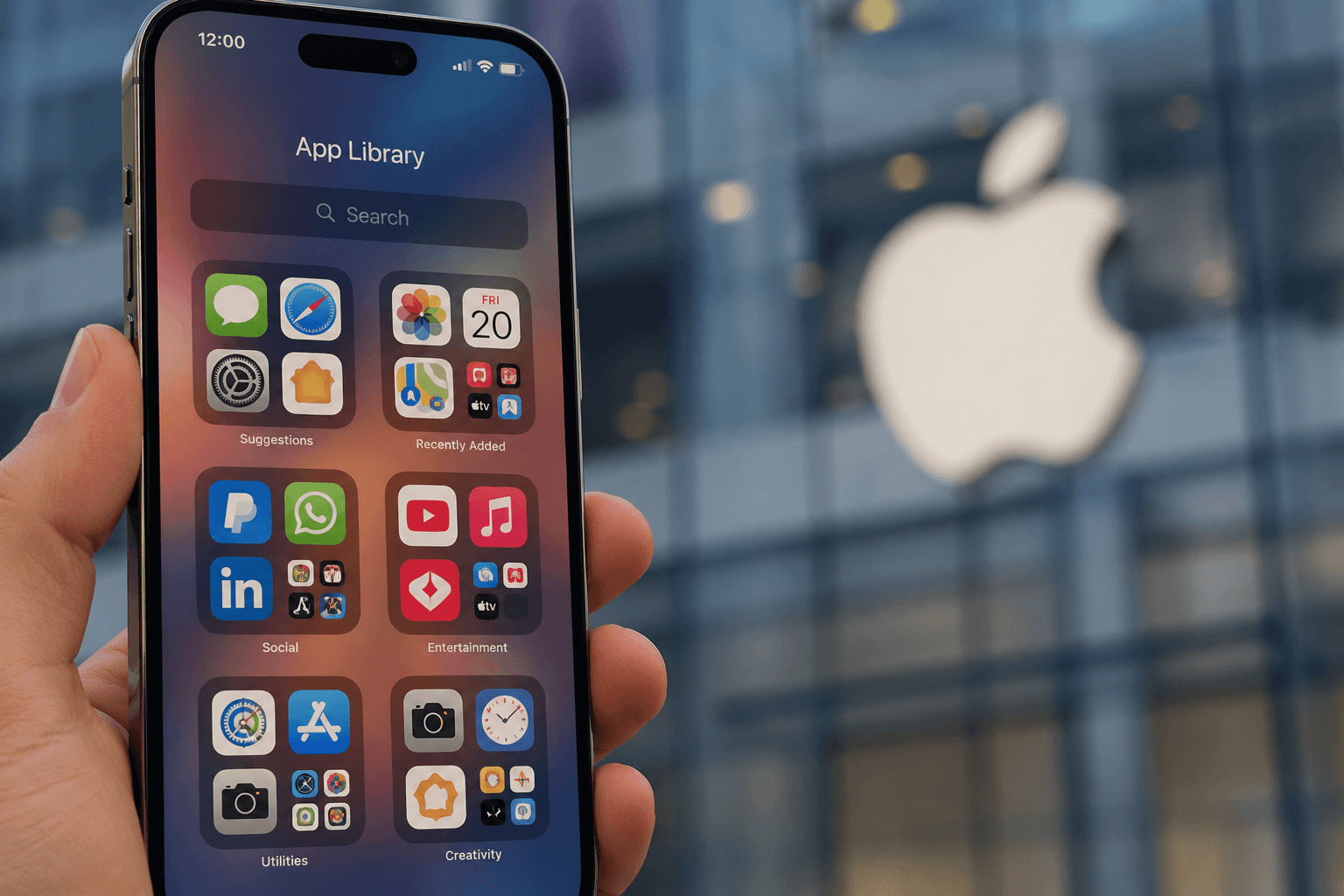
But now, Apple is quietly transforming the Apple app economy in a way most users haven’t noticed yet.
This is not a sudden announcement or breaking news. Instead, it’s a gradual but powerful shift that could redefine how apps work—and how users interact with technology.
The Shift in the Apple App Economy: From Apps to System-Level Experiences
Traditionally, apps have been the main gateway to digital experiences:
- Open an app
- Perform a task
- Close the app
However, the Apple app economy is moving toward a new model:
- Interact with the system
- Get results across multiple services instantly
What Is Changing?
Apple is integrating more features directly into its operating system:
- Built-in tools replacing third-party apps
- System-wide search reducing app dependency
- Deeper integration between services like storage, payments, and media
As a result, users no longer need to rely heavily on individual apps. The system itself becomes the primary interface.
The Rise of Invisible Apps in the Apple Ecosystem
A major trend in the Apple app economy is the rise of “invisible apps.”
These are apps that:
- Operate in the background
- Provide services without direct interaction
- Integrate into system-level workflows
Example of This Shift
Instead of opening multiple apps, users can:
- Search once
- Tap once
- Let the system complete the task
This means apps still exist—but they are no longer the center of attention.
Apple’s Strategy Behind the Changing App Economy
The transformation of the Apple app economy is driven by three key strategies:
1. Expansion of Apple Services
Apple is rapidly growing its subscription ecosystem:
- Cloud services
- Media platforms
- Payment systems
This shifts the focus from one-time app purchases to recurring ecosystem revenue.
2. Stronger Platform Control
Apple continues to tighten control over its platform by:
- Enforcing stricter App Store rules
- Requiring updated development standards
- Managing how apps interact with users
This ensures a consistent experience but increases developer dependence.
3. Bundled Digital Experiences
Instead of standalone apps, Apple is promoting:
- Integrated services
- Unified subscriptions
- Seamless cross-platform experiences
Users stay within Apple’s ecosystem rather than switching between apps.
Why the Apple App Economy Shift Matters
For Users
- Faster and simpler digital experiences
- Less need to manage multiple apps
- More convenience with fewer decisions
For Developers
- Reduced visibility for standalone apps
- Increased reliance on Apple’s ecosystem
- Greater competition within a controlled environment
For Businesses
- Harder to build direct user relationships
- Increased dependency on platform policies
- Need to adapt to system-level integration
Is This the Beginning of a Post-App Economy?
The evolution of the Apple app economy suggests a future where:
- Apps are no longer the main interface
- Operating systems control user interaction
- Platforms dominate digital ecosystems
In this model, apps don’t disappear—they become less visible and more integrated.
Future of the Apple App Economy
1. Decline of Standalone Apps
Fewer apps will succeed independently as system-level features grow.
2. Rise of Platform Dominance
Apple will control discovery, interaction, and monetization within its ecosystem.
3. New Developer Strategies
Developers will need to:
- Build services instead of standalone apps
- Focus on integration
- Align with platform ecosystems
4. Growth of Subscription Models
Recurring revenue will dominate the future of the Apple app economy.
Key Takeaways
- The Apple app economy is shifting toward system-level experiences
- Apps are becoming less visible and more integrated
- Users gain convenience, but platforms gain control
- Developers must adapt to a more centralized ecosystem
- The app economy is evolving—not disappearing
Conclusion
The Apple app economy is not ending—it is transforming.
Apple is moving from an app-driven world to a system-driven ecosystem, where users interact less with individual apps and more with integrated experiences.
For users, this means simplicity and speed.
For developers, it means adapting to a new reality.
For the tech industry, it signals the rise of a post-app era.
And the most significant part?
This transformation is happening quietly—right in front of us.